

Threads of State: How a Fugu Outfit Turned Ghana–Zambia Diplomacy into a Meme Summit (Satire)
Once upon a time in the Republic of Uncommon Sense, diplomacy didn’t wobble because of sanctions, trade wars, or leaked cables.
It wobbled because of cotton.
Yes—cotton. That soft, innocent-looking material that has never paid school fees, but somehow keeps sponsoring international conversation. One photo, one confident smock, and suddenly Ghana and Zambia were holding an online “summit” about culture, ownership, and the global economy of opinions.

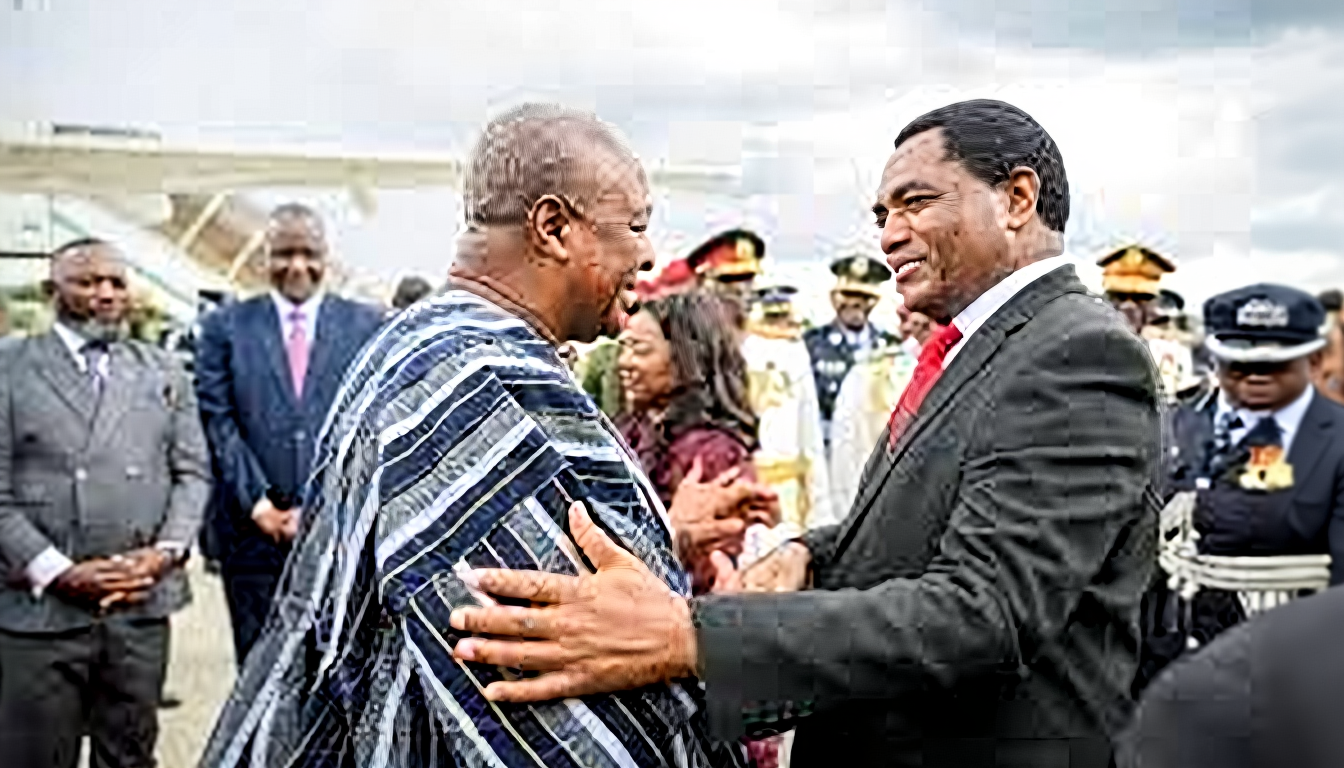
What happened with the Ghana–Zambia fugu trend?
Here’s the short version: a Ghanaian political figure appeared in public wearing a fugu smock during a visit to Zambia. The internet did not ask for policy papers. The internet asked for tailoring papers.
Within hours, social media transformed a calm diplomatic moment into a lively cultural debate—equal parts admiration, pride, curiosity, and comedy. One side said “nice,” another side said “ours,” and neutral observers simply said: “This better come with a season finale.”
Meet the main character: the fugu (not the politician)
Let’s be clear: this story is not really about politics. It is about fabric with confidence.
The fugu is not ordinary clothing. The fugu is a veteran. It has attended funerals, festivals, weddings, campaign trails, and budget readings. It has survived new constitutions and old promises. It has outlasted governments with the calm energy of an elder who has seen everything and still refuses to clap for nonsense.
So when it showed up abroad, the fugu didn’t “appear.” It arrived. Like an ambassador with a relaxed neckline and zero interest in your hot take.
People initially thought the politician was wearing the smock. Later analysis confirmed the truth: the smock was wearing the politician.
X becomes the United Nations of Bad Takes
X (formerly Twitter, currently the world’s busiest courtroom) opened an emergency session. There was no judge. No evidence standards. Just confidence, data bundles, and the holy power of screenshots.
Ghanaians arrived armed with:
- History
- Pride
- Memes
- And one uncle who claims his grandfather invented weaving behind a cocoa shed
Zambians arrived with calm composure—the kind that says, “We are not pressed… but we are watching.” Neutral observers arrived asking the only question that matters in 2026: “Is this on Netflix?”
And just like that, diplomacy moved from embassy halls to comment sections—where all treaties are signed with emojis.
Emergency experts and the rise of WhatsApp anthropology
As tradition demands, emergency experts emerged from the shadows. Within minutes, everyone became:
- A textile historian
- A cultural anthropologist
- A professor of Precolonial Cotton Studies (online campus)
Somebody produced a blurry black-and-white photo from “back then” as proof. Proof of what? Nobody knows. But it was proof—because the internet respects confidence more than footnotes.
Meanwhile, actual governments remained diplomatic—smiles, handshakes, protocol. Citizens did not remain diplomatic. Citizens remained entertained.
Why this “cotton diplomacy” hit so hard
Because it sat at the intersection of three powerful African forces:
- Culture — identity is serious business
- Community — everyone wants to belong to something bigger than stress
- Comedy — the continent’s most reliable coping mechanism
It also revealed something hilariously profound: you can postpone hard conversations, but you cannot postpone a good outfit. In the Republic, the economy can trend later—cotton must be addressed immediately.
And let’s be honest: this was the most peaceful cross-border “clash” in a long time. No sanctions—just hashtags. No missiles—just memes. No trade war—just tailoring.
So if diplomacy must wobble, let it wobble in style. If Africa must ever disagree, let it be over tailoring, not territory.
The cotton has spoken.
More from the Republic
Outbound authority links (optional, SEO-friendly)
FAQs
What is a fugu smock?
A fugu (often called a smock) is a traditional handwoven garment commonly associated with northern Ghana and parts of West Africa, worn for cultural events and formal occasions.
Why did the Ghana–Zambia fugu outfit trend on social media?
The image blended culture, pride, identity, and style—then landed on social media, where serious topics become a meme summit within minutes.
Is this article reporting news or satire?
This is satire from the Republic of Uncommon Sense—humour used to reflect how social media behaves, not to insult any culture or people.