


ECG estimated billing has become a source of frustration for consumers who say their utility bills do not reflect changes in actual consumption. My own experience raises a simple question: what exactly is the bill based on?
Once upon a time, in the Republic of Uncommon Sense, a citizen opened his tap.
Nothing came out.
He waited.
Nothing.
He turned it left. He turned it right. He stared into the mouth of the tap as though water might be hiding there out of shyness.
Still nothing.
Then, at the end of the month, something finally flowed.
The water bill.
Wonderful country.
Residents in parts of Ghana have complained of going for weeks and even months with unreliable water supply while the bills continue arriving with the punctuality of a Swiss train.
In Gbetsile and surrounding communities, residents have protested precisely this contradiction: unreliable water, but very reliable billing. As recently as this week, residents of Community 25 went to the Ghana Water office at Gbetsile demanding answers over another prolonged shortage.
Apparently, the one thing Ghana Water can sometimes deliver under pressure is an invoice.
ECG Estimated Billing in Ghana: When Consumption Falls but the Bill Doesn’t

Meanwhile, somewhere in Kumasi, I decided to conduct my own private experiment in national development.
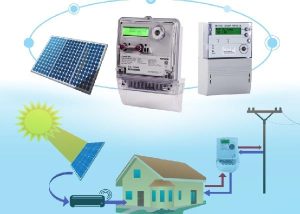
Electricity bills were becoming frightening, so I invested in solar power.
Panels went onto the roof. Batteries arrived. The sun was recruited into the household economy.
I thought I had finally escaped.
After all, if ECG sells electricity and I drastically reduce the electricity I buy from ECG, elementary arithmetic suggests that my ECG bill should also drastically reduce.
That was before I remembered where I live.
The solar panels worked beautifully.
The ECG bill also worked beautifully.
Month after month, the house depended heavily on sunshine, yet the electricity bill continued arriving with the confidence of a landlord who knows you cannot relocate.
At one point, I began wondering whether ECG had found a way of metering sunlight.
Perhaps somewhere inside my post-paid meter there is a small officer recording:
Morning sunshine: 14 units.
Afternoon sunshine: 22 units.
Cloudy conditions discount: 3 units.
Total payable to ECG: Please don’t ask questions.
When the House Emptied but the Bill Stayed Home
But my billing story had started long before the solar panels arrived.
My wife travelled for three months. My children were away in boarding school. For that period, I was virtually the sole occupant of the house, leaving for work and returning late in the evening.
In any ordinary universe, household electricity consumption should have dropped noticeably.
Three people had effectively disappeared from the domestic energy equation.
But the bills?
Ah.
They continued arriving with efficient regularity.
My family population had reduced dramatically. My time at home had reduced. The number of people using appliances, lights, televisions, water heaters and everything else had reduced.
The bill apparently did not receive the memo.
Eventually, the matter went before the Public Utilities Regulatory Commission.
Following the PURC intervention, overbilling on the account was acknowledged, and I was asked to pay GH¢800 monthly towards defraying the accumulated bill instead of the GH¢1,600-plus monthly figures that had been arriving.
Now, let us be fair.
That GH¢800 settlement amount does not by itself prove that my actual monthly electricity consumption was exactly GH¢800. It was part of the arrangement for dealing with the disputed account.
But it establishes something important.
The billing had already become serious enough to require regulatory intervention.
Then I installed solar.
One would reasonably expect my dependence on ECG power to fall significantly.
It did.
What apparently did not fall was the bill.
Today, despite much of my household electricity being supplied by solar, the monthly ECG bills are still hovering around the same GH¢1,600 territory that had previously sent me to the PURC.
Which brings us to the interesting part.
What Exactly Is ECG Billing Me On?
I do not see ECG personnel taking a fresh on-site reading of my post-paid meter every month before these bills are produced.
Perhaps the readings are being captured remotely.
Excellent.
Then that should be clear.
Perhaps the bill is estimated.
Wonderful.
Then that too should be clear.
What should not happen is for a customer to receive a four-figure bill every month and be left trying to reverse-engineer the arithmetic like a final-year engineering student.
PURC itself has continued to report consumer complaints involving high or unexpected bills, estimated billing and inaccurate meter readings.
It has also reported billing challenges associated in some areas with ECG’s transition from its old billing system to a new one, with ECG indicating that efforts were being made to resolve disparities.
This is why my question is no longer simply whether my bill feels too high.
The question is much more basic:
What exactly is the basis of the bill?
If the amount comes from an actual meter reading, show me the reading.
If it comes from a remote reading, identify it.
If it is estimated, say so.
And if it is based on historical consumption, then we need to ask how quickly that history learns that circumstances have changed.
Because if the system keeps looking backwards, my present reality may have changed while the computer continues living comfortably in my past.
My wife may travel.
The children may go to boarding school.
I may spend most of the day at work.
Solar may take over much of the household load.
But somewhere inside the billing system, yesterday’s household may still be consuming today’s electricity.
That would be quite an achievement.
Einstein should have studied ECG billing instead of relativity.
What an ECG Post-Paid Bill Should Tell You
Interestingly, Ghana’s own electricity rules make the matter far less mysterious than some bills appear.
The Electricity Supply and Distribution Rules require a bill to contain, among other things, the dates of the previous and current meter readings or estimates, the previous and current readings or estimates, whether the electricity consumption is actual or estimated, the units consumed, the approved tariff and the amount due.
The rules also require meter readings to follow a consistent cycle.
Estimated billing is permitted under specified circumstances, including where a meter is faulty, not functioning or cannot be accessed. Where a customer has been supplied for at least twelve months, an estimated bill is to be based on the average units used over the previous twelve months.
And when an actual meter reading eventually becomes available, the estimate is supposed to be reconciled with reality.
There is that troublesome word again:
Reality.
Because reality is precisely what many consumers want to see reflected in their bills.
If my electricity consumption goes down, show me.
If it goes up, show me.
If the meter says I used 500 units, charge me for 500 units at the appropriate tariff.
But if nobody can demonstrate how the units on the bill were obtained, then we have crossed from electricity billing into creative writing.
And as a writer myself, I take professional offence at the competition.
The Bill Will Locate You
And I am hardly alone in asking questions.
PURC has reported interventions resulting in adjustments and refunds for consumers affected by billing discrepancies, incorrect meter readings and estimated billing.
Nobody is arguing that consumers should enjoy electricity or water without paying for it.
Utilities need revenue to generate and purchase power, treat water, maintain infrastructure, repair transformers, replace pipes and keep their systems operating.
But surely the social contract must work both ways.
If citizens are expected to pay accurately and promptly, utilities must also measure accurately and bill transparently.
A bill should represent consumption, not imagination.
The water may not reach your house.
The electricity may barely enter your house.
But the bill will locate you.
GPS cannot compete.
You can hide behind solar panels, batteries, boreholes and polytanks.
Send your wife abroad.
Send the children to boarding school.
Spend the whole day at work.
The utility bill will still knock gently at the door and say:
“My brother, I have been looking for you.”
Perhaps there is a perfectly reasonable explanation for every cedi on my bill.
Excellent.
Then show me the opening meter reading, the closing meter reading, the units consumed, the tariff applied and whether the bill is based on an actual reading or an estimate.
That should not require a pilgrimage to PURC.
Because electricity billing should be arithmetic.
It should not require revelation.
And when a customer finally goes to complain, somebody should not merely examine the computer thoughtfully, click two buttons, stare solemnly at the screen and pronounce the most powerful sentence in Ghanaian bureaucracy:
“Boss, according to the system, everything is correct.”
In the Republic of Uncommon Sense, the system is always correct.
It is only reality that keeps making mistakes.
Author’s Note: This commentary draws partly on my personal experience with a post-paid ECG account, including a billing dispute handled through the Public Utilities Regulatory Commission. It does not suggest that every ECG bill is inaccurate. It asks for something much simpler: that every bill should be transparent, verifiable and capable of being reconciled with the electricity actually consumed.