


Ghana Cocoa Price Cuts: When Cocoa Sneezed
By Jimmy Aglah | Republic of Uncommon Sense
Once upon a time in the Republic of Uncommon Sense, cocoa was not just a crop. It was a relative. You did not speak about cocoa casually. You spoke about it the way you spoke about your grandmother — with reverence, slight fear, and the understanding that school fees were hiding somewhere inside her handbag.
Then one morning, the Ghana cocoa price cuts arrived — quietly, like harmattan dust. And suddenly, the entire nation became an economist.
The current Ghana cocoa price cuts are not just policy decisions; they are livelihood decisions.
Ghana Cocoa Price Cuts: The “Adjustment” Explained
The government, through our beloved and permanently stressed institution, COCOBOD — affectionately known as the Ghana Cocoa Board — adjusted the producer price downward.
In Ghana, nothing is reduced. It is “adjusted”—even your salary.
The explanation was noble, technical, and sprinkled with international vocabulary: world prices have fallen, liquidity has tightened, forward contracts have misbehaved, and global markets have developed mood swings. If you want the global context in plain numbers, consult the International Cocoa Organization (ICCO).
When cocoa catches a cold in London, the farmer in Sefwi starts sneezing.
Politics Enters the Farm: Government vs Opposition
On one side of the aisle, the ruling party assures us the decision is painful but patriotic. They call it responsible stewardship — like a father who reduces chop money because the economy has decided to fast.
On the other side, the opposition insists this is mismanagement wrapped in PowerPoint. They remind us that cocoa once crossed historic highs, and we apparently blinked and missed it.
Ghanaian Politics Has a Rhythm
- When prices rise, it is competence.
- When prices fall, it is sabotage.
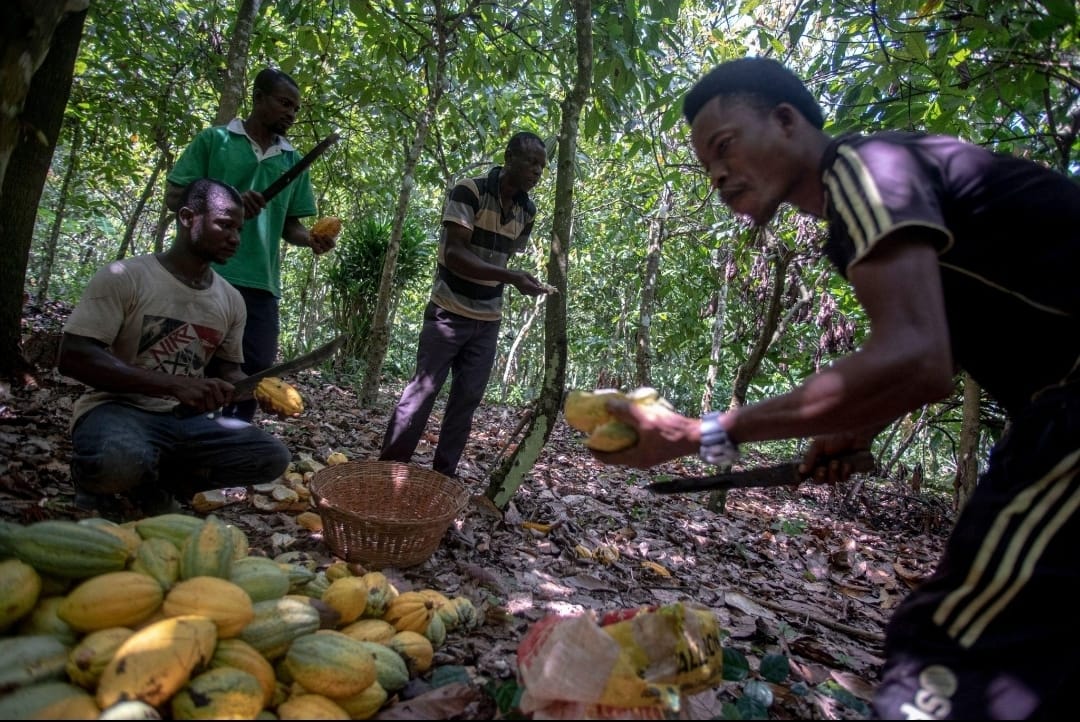
Meanwhile, the farmer is somewhere in the middle, holding a machete and wondering if the trees also belong to a political party.
What the Farmer Actually Calculates
Let us leave Accra for a moment and visit the village. The cocoa farmer does not speak in global indices. He speaks in fertilizer, school uniforms, and roofing sheets.
He asks one simple question: “Will this price help me survive?”
Some farmers have accepted the new rate with the calmness of people who have seen too much. Others are furious. A few are considering whether gold in the soil may be more loyal than cocoa on the tree.
The Unspoken Risk: When Cocoa Becomes Less Attractive
And that is where the national anxiety deepens. Because when cocoa becomes less attractive, galamsey begins to whisper sweet nothings. When gold whispers, rivers cry.
(If you’ve followed our earlier dispatches on livelihoods and extraction, revisit: Galamsey and the Price of Survival.)
COCOBOD: The Middle Child of the Economy
COCOBOD must please farmers, negotiate with international buyers, borrow from banks, pay Licensed Buying Companies, stabilize prices, and still smile for Parliament. It is like a middle child in a large Ghanaian family — blamed for everything, credited for nothing.
When global prices were high, some ask: Why didn’t we lock in more gains? When prices fell, others ask: Why were we exposed?
In the Republic of Uncommon Sense, hindsight is our most productive export.
Citizen Economists and WhatsApp Futures Traders
On social media, experts have emerged who can calculate international commodity futures while waiting for trotro. Charts are circulating faster than cocoa trucks. Voice notes are being forwarded with the confidence of doctoral theses.
We analyse until the analysis becomes the problem.
The Proverb Ghana Must Not Ignore
Here is the uncomfortable truth wrapped in proverb: When the drumbeat changes, the dancer must adjust — but he must not forget who paid for the drum.
Cocoa is not merely a commodity. It is the backbone of rural Ghana. If the farmer feels abandoned, politics will not rescue the harvest. If trust erodes, no pricing formula will restore confidence.
Beyond Blame: What “Cocoa Sustainability” Really Means
The conversation must move beyond “Who reduced it?” to “How do we make cocoa sustainable again?” Because sustainability is not a slogan. It is fertilizer access. It is timely payment. It is transparency. It is honest communication. It is aligning global market realities with local survival.
For related context on household pressure and economic “adjustments,” see: The Adjusted Economy and the Cost of Living.
The Chocolate Paradox
Ghana produces some of the finest cocoa in the world. We lecture Europe about child labour. We negotiate premiums. We attend international conferences on sustainability. Yet the farmer who grows the bean often struggles to afford the chocolate.
There is something poetic about that. And slightly tragic.
Final Word: When Cocoa Coughs, Ghana Negotiates With Destiny
Cocoa pricing has become a national drama — part economics, part politics, part theatre. But beneath the headlines and press conferences lies a simple Ghanaian truth:
- If the farmer is well, the nation is well.
- If the farmer is confused, the nation debates.
- If the farmer is angry, elections tremble.
In the Republic of Uncommon Sense, we argue loudly — but the cocoa tree continues to grow quietly. Let us hope that while we debate percentages, we do not forget the hands that harvest them.
At the heart of the Ghana cocoa price cuts debate lies one question: can policy stability protect farmer dignity?
Recommended: The Uncommon Sense Playbook


Politics, pricing, and public debate can get noisy. If you want a sharper mind for noisy times, grab The Uncommon Sense Playbook — a practical guide for thinking clearly when the Republic gets loud.
CALL TO ACTION (RUS): Has the “adjustment” reached your farm gate, your market stall, or your household budget? Drop your experience in the comments. Share this with your favourite WhatsApp economist — and tag someone who still remembers when cocoa paid school fees without negotiating. Subscribe for more Republic dispatches where policy meets proverb.