

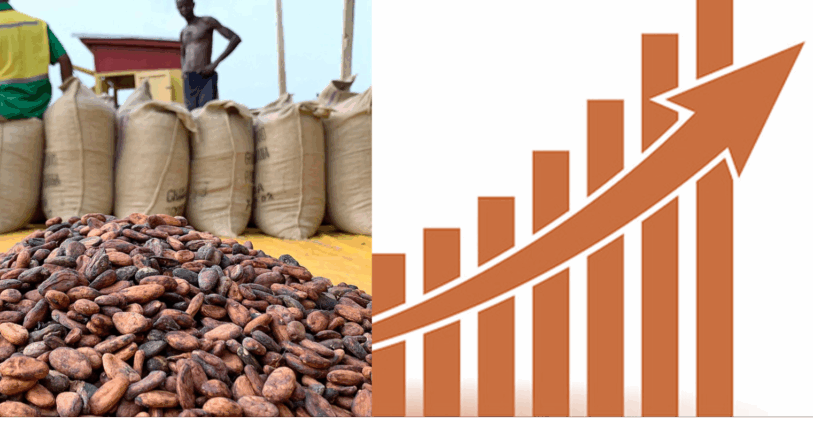

Ghana Cocoa Producer Price: 5 Critical Truths Every Farmer Should Understand
The ghana cocoa producer price is not just a number announced at a press conference. It is a policy instrument, an economic signal, and for many rural households, the difference between hope and hardship.
Every season, debates erupt. Global cocoa prices rise sharply on international markets, yet the local producer price does not always move in equal proportion. The immediate question follows: Why?
To understand the issue, we must examine how Ghana’s pricing system works, what it protects, and where its tensions lie.
1. How the Ghana Cocoa Producer Price Is Determined
The Ghana cocoa producer price is set annually by COCOBOD through a structured pricing formula. The process considers:
- Projected export earnings
- Forward sales contracts already negotiated
- Operational costs
- Stabilization reserves
- Government policy objectives
This system is not arbitrary. It is designed to balance farmer welfare with national revenue stability.
2. The Role of the Forward Sales Model
Ghana operates a forward sales system, meaning cocoa is often sold ahead of harvest at pre-agreed prices. This provides revenue predictability and reduces exposure to global volatility.
However, when international cocoa prices surge beyond contracted levels, Ghana cannot instantly adjust upward. That is where public frustration often begins.
According to the International Cocoa Organization (ICCO), global cocoa prices are influenced by supply expectations, weather patterns, and speculative trading activity. These international dynamics may move faster than domestic pricing structures.
3. Why Producer Prices May Lag Behind Global Prices
The relationship between global market prices and the Ghana cocoa producer price is indirect but significant.
If forward contracts were signed before a dramatic price spike, Ghana is obligated to deliver at agreed terms. This protects against price crashes — but it can also limit immediate gains during rallies.
Price stability is the shield. Timing is the sword.
4. Does the System Protect or Restrain Farmers?
Critics argue that farmers should benefit immediately from global surges. Supporters counter that the system protects farmers during downturns.
When prices fall sharply, forward sales cushion revenue shocks. Without such mechanisms, rural incomes could collapse in volatile seasons.
The debate is not about good versus evil. It is about risk versus reward.
5. Can the Ghana Cocoa Producer Price System Be Reformed?
Reform discussions often focus on:
- Introducing flexible pricing bands
- Improving transparency in contract timing
- Enhancing farmer communication
- Strengthening stabilization funds
Reform does not necessarily mean abandonment. It may mean refinement.
Featured Insight: 5 Key Factors That Shape Producer Prices
- Forward contract timing
- Global cocoa futures trends
- Exchange rate fluctuations
- Operational costs and debt servicing
- Government stabilization policy
Understanding these five elements transforms outrage into insight.
Why This Debate Matters
Cocoa remains central to Ghana’s foreign exchange earnings. Producer pricing therefore influences:
- Rural livelihoods
- National revenue
- Smuggling risks
- Political discourse
When neighboring countries adjust pricing differently, cross-border incentives emerge. That is not merely economic — it is strategic.
A Balanced Perspective
The Ghana cocoa producer price system is neither perfect nor reckless. It is a deliberate economic design shaped by history, volatility, and policy trade-offs.
In economics, certainty has a cost. Volatility has a price.
The real conversation should not be emotional outrage, but structural improvement.
Frequently Asked Questions
Why doesn’t Ghana immediately match global cocoa price spikes?
Because much of the crop is sold in advance through forward contracts, limiting instant upward adjustments.
Does forward selling hurt farmers?
It can limit gains during price surges, but it also protects incomes during price crashes.
Who decides the Ghana cocoa producer price?
COCOBOD sets the price using projected revenues, costs, and stabilization mechanisms.
Can the system be reformed?
Yes. Flexibility, transparency, and improved communication could enhance trust and responsiveness.
The Uncommon Sense Reflection
Policy debates often reduce complex systems into slogans. Yet the Ghana cocoa producer price is a balancing act between risk management and opportunity capture.
If we understand the mechanics, we can demand reform intelligently — not impulsively.
The Uncommon Sense Playbook


Want sharper thinking on policy, economics, and leadership? Explore insights that move beyond noise and into strategy.