


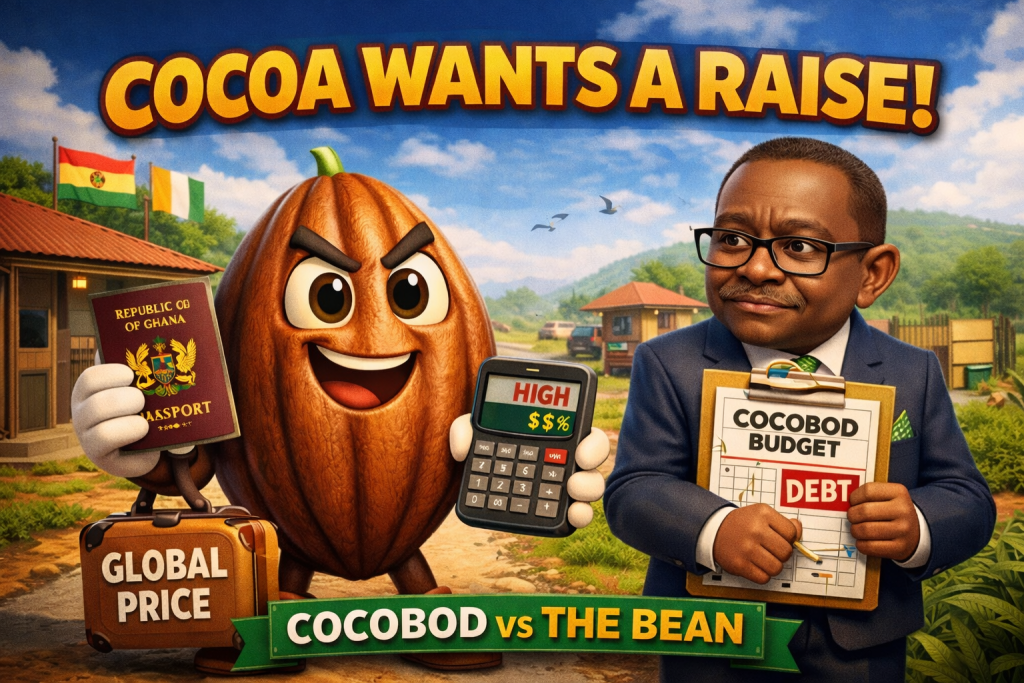

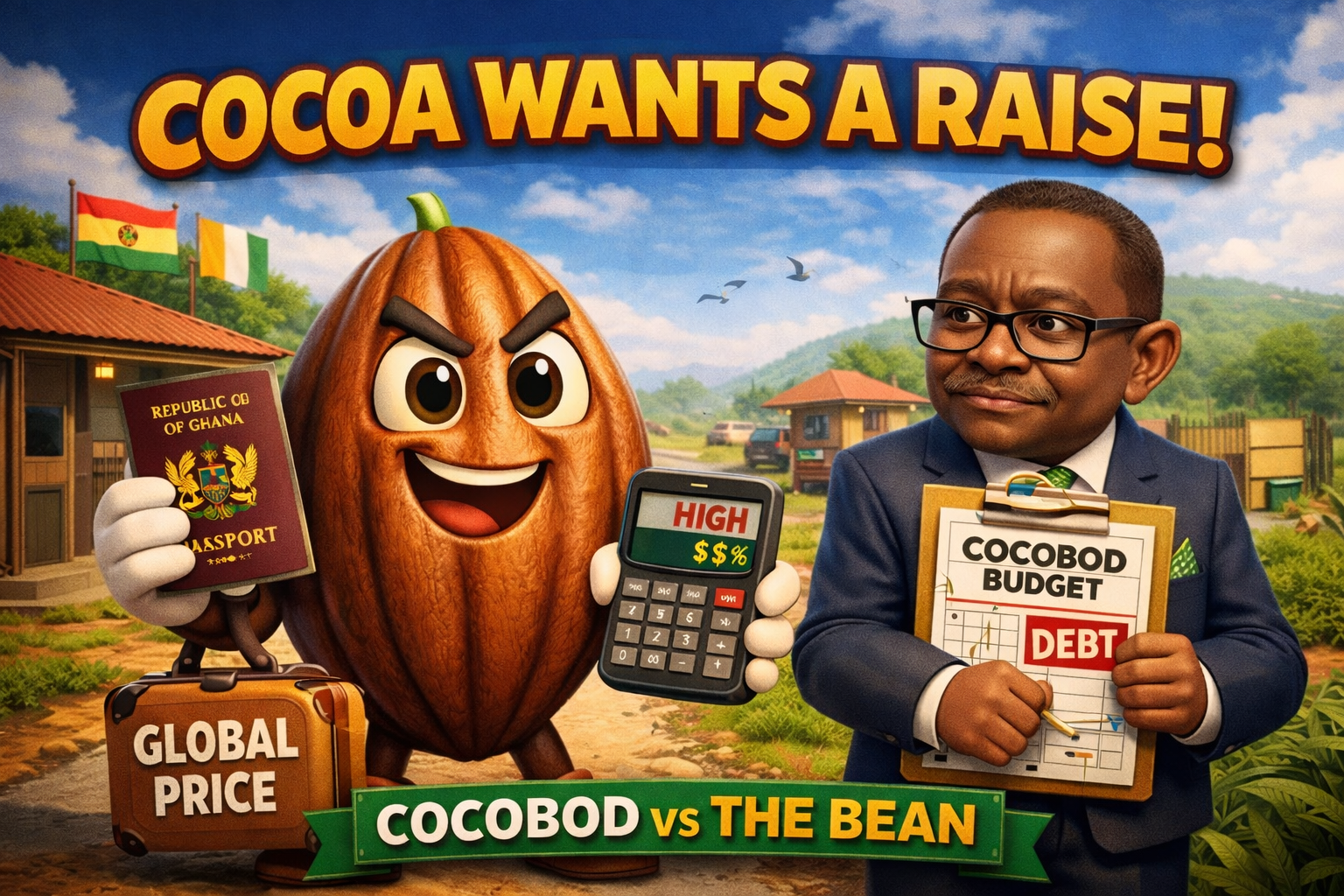
Ghana Cocoa Smuggling: When Beans Grow Wings
Ghana cocoa smuggling rises when price gaps widen across borders. Cocoa may be a crop, but it behaves like capital: where value is higher, it quietly relocates. In seasons of sharp price disparity, beans do not argue. They migrate.
The issue is closely linked to Ghana cocoa price cuts and the structure of the COCOBOD pricing system. When domestic prices lag behind regional alternatives, incentives shift faster than policy explanations.
Why Ghana Cocoa Smuggling Happens
1. Cocoa Price Disparity Ghana vs Neighbors
When neighboring markets offer higher farm-gate prices, cross-border trade becomes economically attractive. Farmers respond to margins, not speeches.
2. Timing Gaps in Price Adjustments
If domestic prices adjust slower than global surges, temporary disparities appear. These windows create strong incentives for unofficial trade.
3. Currency and Exchange Pressures
Exchange rate shifts affect real income perception. Even small differentials become significant in tight-margin farming communities.
4. Rising Input Costs
Fertilizer, transport, and labor costs continue rising. When margins shrink, alternative sales channels become survival mechanisms.
“Government calls it smuggling. Farmers call it arithmetic.”
5. Informal Trade Networks
Border communities share markets, relationships, and routes. Smuggling thrives where social networks make it easy.
6. Weak Enforcement Incentives
Where enforcement lacks consistency, economic opportunity fills the vacuum.
7. Trust Deficit
Perception matters. If farmers believe pricing systems disconnect them from global gains, compliance weakens.
“When trust declines, regulation negotiates.”
The Economic Impact of Ghana Cocoa Smuggling
- Reduced official export volumes
- Lower foreign exchange inflows
- Distorted production statistics
- Planning uncertainty for COCOBOD
According to data trends reported in the World Bank Commodity Markets Outlook, volatility in commodity pricing amplifies cross-border arbitrage incentives during price shocks.
Smuggling is rarely ideological. It is structural. When price signals differ across borders, markets adjust themselves.
How Ghana Can Reduce Cocoa Smuggling
1. Greater Transparency in Pricing
Clear explanations of how producer prices are set can rebuild trust.
2. Flexible Adjustment Mechanisms
Structured flexibility during exceptional global price rallies may narrow temporary gaps.
3. Strengthened Farmer Incentives
Improved access to credit, inputs, and support programs reduces vulnerability.
“Cocoa does not betray policy. Policy must understand cocoa.”
Featured Snapshot: 7 Hard Truths Fueling Ghana Cocoa Smuggling
- Price gaps create opportunity.
- Delayed adjustments widen gaps.
- Currency shifts magnify perception.
- Input costs compress margins.
- Informal networks ease movement.
- Enforcement inconsistency weakens deterrence.
- Trust deficits accelerate exits.
Why Ghana Cocoa Smuggling Is Not Just a Border Problem
Ghana cocoa smuggling is often framed as a law-enforcement issue. But at its core, it is an economic alignment issue. Where incentives are misaligned, compliance weakens naturally. The border does not create smuggling; disparities do.
When global cocoa prices rise sharply and domestic adjustments lag, farmers feel the difference immediately. Radio stations report international surges. Traders quote regional prices. Expectations shift faster than policy announcements. In that environment, even a temporary gap can feel permanent.
This is why solutions must move beyond checkpoints. If the structural drivers of Ghana cocoa smuggling remain unchanged, enforcement alone becomes expensive theatre.
Commodity markets reward efficiency. As long as cross-border trade yields higher margins, some level of informal movement will persist. The smarter strategy is to reduce the incentive gap while strengthening transparency and communication.
Smuggling, in this sense, is not rebellion. It is response.
FAQ: Ghana Cocoa Smuggling
Why does Ghana cocoa smuggling increase?
It increases when farm-gate price differences between Ghana and neighboring countries widen significantly.
Does smuggling hurt Ghana’s economy?
Yes. It reduces official exports and foreign exchange earnings.
Can enforcement alone stop cocoa smuggling?
No. Reducing price disparities and strengthening farmer incentives are more sustainable solutions.
Is cocoa smuggling unique to Ghana?
No. Cross-border commodity arbitrage occurs wherever price differences exist.
In the Republic of Uncommon Sense, we do not accuse. We examine. If cocoa beans grow wings, perhaps it is not rebellion but economics in motion.