






When an Airport Sneezes, Ghana Catches a Debate
Once upon a time in the Republic of Uncommon Sense, the Kotoka Airport renaming debate cleared its throat.
Not to announce boarding.
Not to complain about lost luggage.
Just a polite ahem—and suddenly the entire nation dropped its kenkey, adjusted its reading glasses, and entered a symposium.
“Rename Kotoka Airport.”
Three words.
Short sentence.
Long quarrel.
The Kotoka Airport Renaming Debate
The Kotoka Airport renaming debate has quickly become one of Ghana’s most revealing national conversations, exposing how easily symbolic change captures attention while deeper reform struggles to compete.
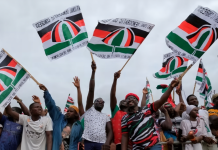
Within minutes, the public square became a debating arena. Facebook turned into a constitutional court. WhatsApp family groups transformed into historical tribunals. Even the trotro mate—whose job description officially excludes philosophy—had opinions, complete with footnotes.
One gentleman thundered: “You can’t rename history!”
Another countered: “You can’t honour a coup at the country’s front door!”
A third, more practical Ghanaian asked the only question that mattered: “Will the new name make my flight cheaper?”
No one answered him. Such realism is often ignored in serious national conversations.
When Symbols Become Battlegrounds
Ghana, bless her earnest soul, has a special talent: we turn symbols into battlegrounds. Flags, statues, names—these things receive more scrutiny than potholes. An airport, minding its own business since colonial times, suddenly finds itself accused of ideological misconduct.
“How dare you still be called Kotoka?”
“Who authorised your name?”
“Which committee approved your surname?”
The airport, confused, flips through its old documents like a civil servant nearing retirement. It remembers being called Accra Airport—simple, harmless, minding its geography. Then one morning in history class, it woke up wearing military boots.
That name stuck.
Now, decades later, democracy knocks gently on the terminal glass and says: “My friend, we need to talk.”
History Arrives With Luggage
History, as usual, refuses to travel light. It arrives with trunks, contradictions, and receipts.
Some argue you don’t erase history by renaming. Others insist you don’t celebrate democratic disruption by engraving it on your national welcome mat. Both camps are armed with facts. Both are emotionally invested. Both are shouting.
We are a nation that loves history—as long as it behaves itself.
The Public Square Speaks
The elder statesman warns: “If we rename this airport, what next? Rename Black Star Square? Rename Independence?”
The youth activist responds: “If we don’t rename it, we are normalising coups!”
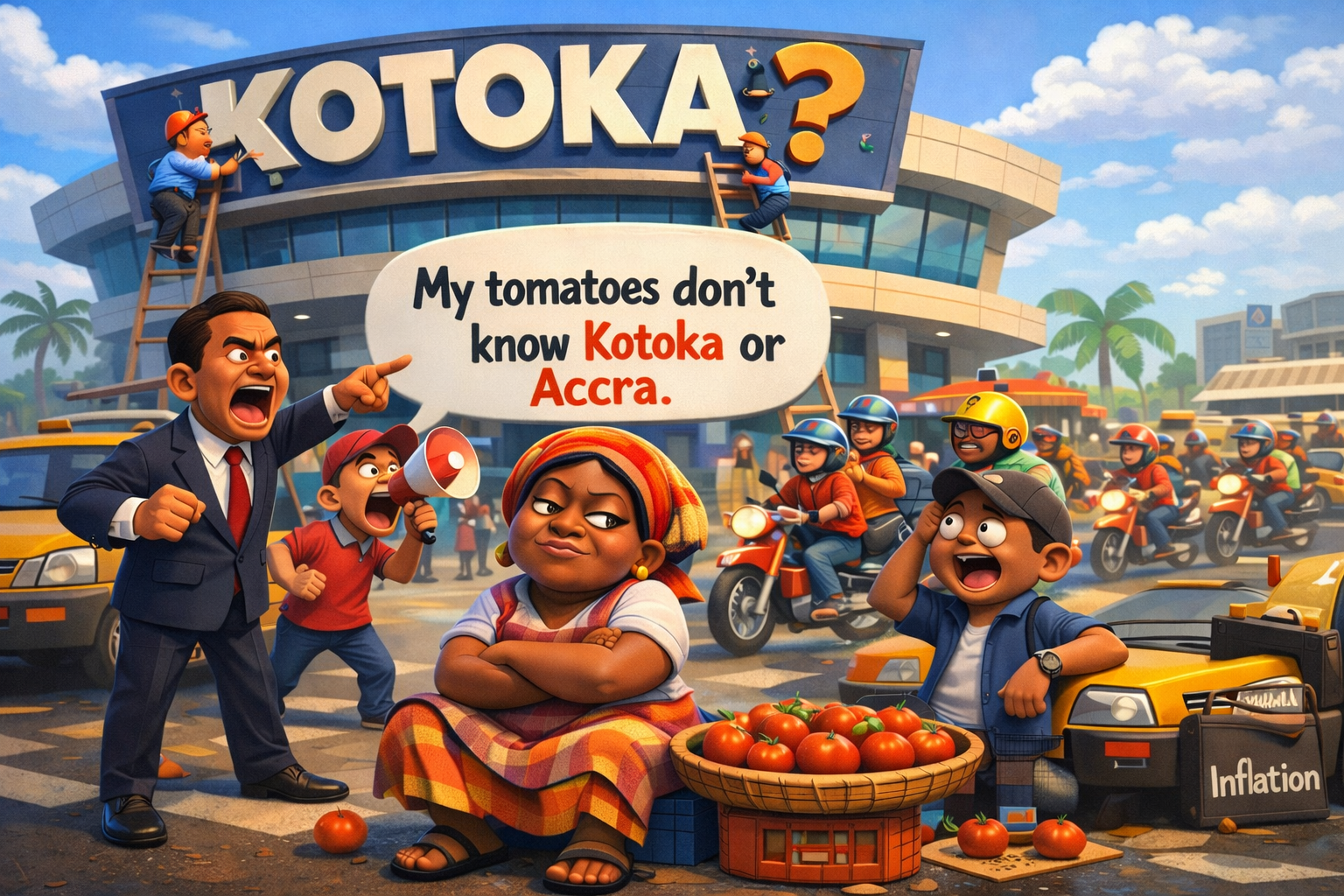
The taxi driver, philosopher of traffic and survival, shrugs: “Call it whatever you like—just fix the road leading to it.”
And a market woman settles the debate with unbothered wisdom:
“My tomatoes don’t know Kotoka or Accra. They only know whether anyone remembers the market women when debates start.”
Renaming Faster Than We Reform
Meanwhile, under fluorescent lights and parliamentary English, bills are introduced, committees formed, and seriousness applied generously.
Inside Parliament, the airport has centre stage.
Outside, okadas rewrite traffic laws daily. Inflation, though currently behaving itself, keeps its old notebook nearby.
This pattern is not new. We have seen it before in other national debates explored in the
Satirical Chronicles
of the Republic of Uncommon Sense, where symbolism often outruns substance.
We rename things the way we rearrange furniture—hoping it will fix the house.
Rename the airport: democracy will heal.
Rename the street: governance will improve.
Rename the ministry: efficiency will arrive early.
And yet, the same problems keep their original names and refuse to move out.
Final Boarding Call
Let us debate. Debate is healthy. Let us remember history—fully, honestly, and without selective amnesia. Let us honour democracy not just with names, but with consistency.
But let us also be honest.
The Kotoka Airport renaming debate reminds us that we rename faster than we reform. If renaming the airport is the loudest reform we can manage, then our silence on everything else is deafening.
And if the airport could speak, it would probably say:
“Call me what you want.
Just don’t forget why you’re travelling.”
Flight Ghana 1957 is boarding.
Destination: Maturity.
Gate: Still under discussion.
📘 Continue the Conversation
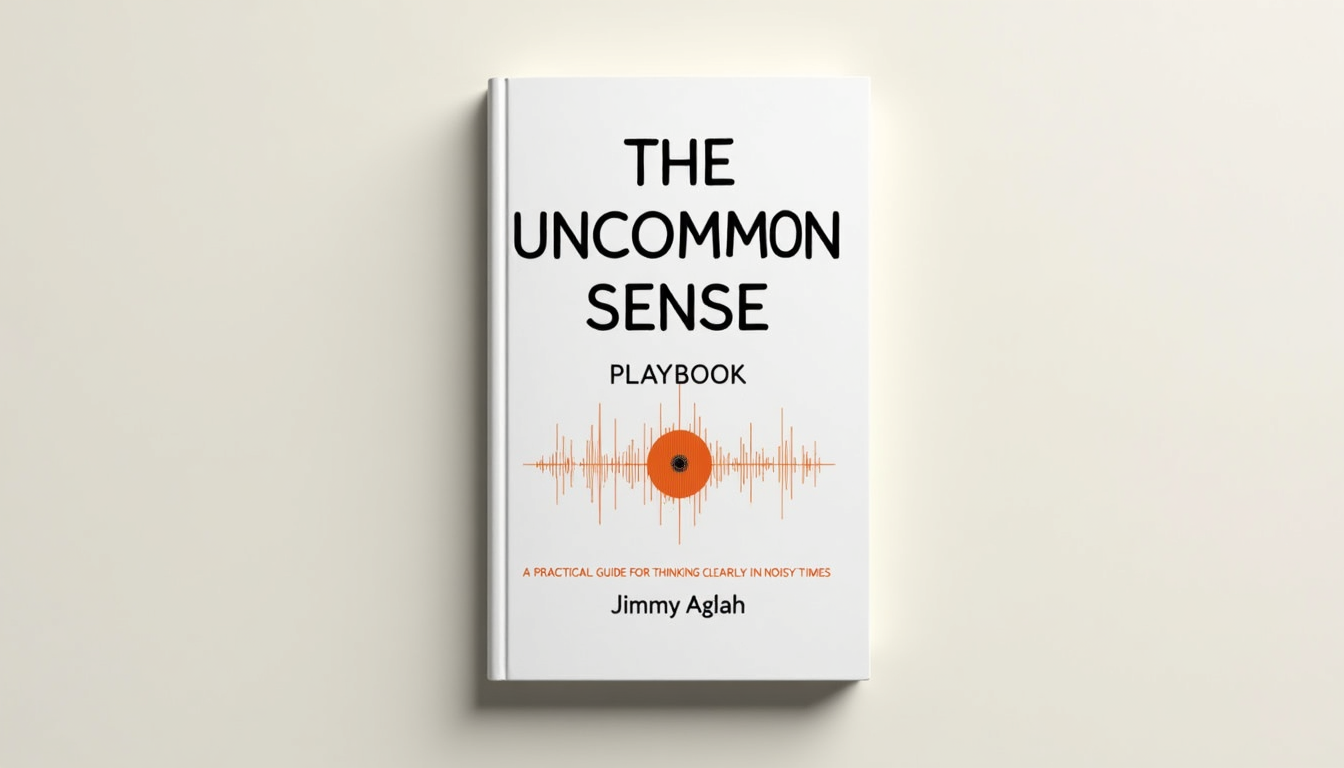
If this piece made you laugh—and then pause—my new book The Uncommon Sense Playbook takes the conversation further: leadership, clarity, governance, and how we think in noisy times.
Because progress begins where slogans end—and thinking begins.