






National Cathedral Audit Ghana: The Gospel According to the Empty Pit
Disclosure: This post contains affiliate-style promotional links to books by the author. They support independent satire and sharp grammar at no extra cost to you.
Once upon a time in the Republic of Uncommon Sense, a hole began to preach.
Not from the pulpit.
Not from the Book.
But from the ground.
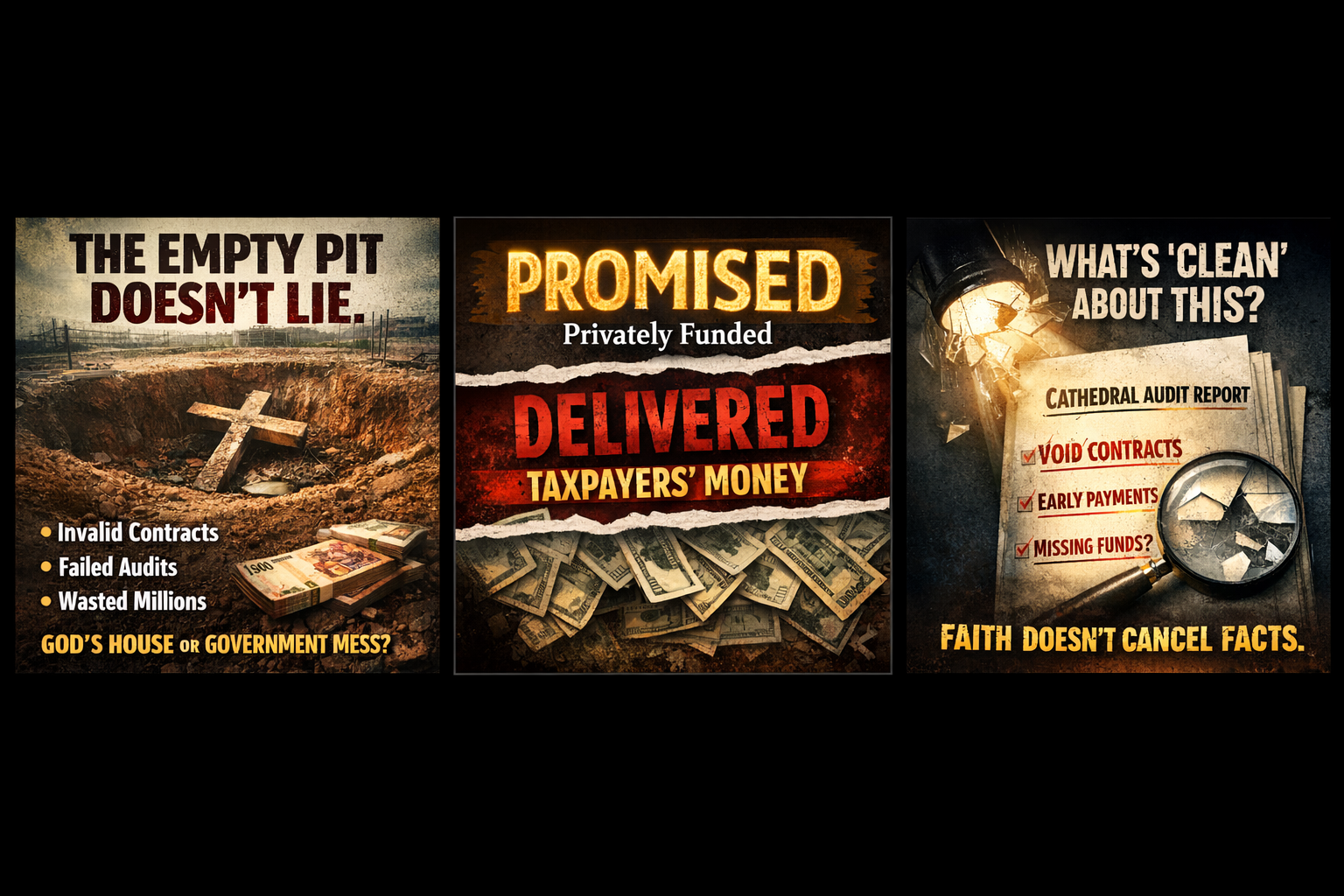
It was a well-funded hole. A sanctified excavation. A pit so anointed that even facts had to remove their sandals before approaching it.
We were told this pit was not empty.
It was pregnant with destiny.
It would give birth to pilgrims, dollars, choirs, and perhaps even the occasional miracle of fiscal discipline.
Architectural drawings were shared with reverence. Economic projections were recited like scripture. And somewhere between faith and finance, the nation was asked not just to believe, but to anticipate prosperity.
But somewhere between prophecy and procurement, the pregnancy became complicated.
And now, like all complicated pregnancies in our Republic, everyone has suddenly become a medical expert.
In this article
The Gospel of “Clean”
A new sermon has emerged.
It says the project was clean.
Spotless. Stainless. Sanitized by audit.
But here is the small problem.
The audit itself refused to speak that language.
The Commission on Human Rights and Administrative Justice did not mount the pulpit to declare righteousness. It simply cleared its throat and spoke in the quiet, inconvenient tone of institutions that still respect evidence.
A contract was void from the beginning.
Procurement rules were not just bent; they were bypassed.
And certain matters warranted further investigation.
Now, in the Republic of Uncommon Sense, “further investigation” is not a certificate of holiness.
It is the polite Ghanaian way of saying, “Let us not conclude too quickly, before the facts embarrass us.”
If you want to read the official language for yourself, start with the CHRAJ decision on the National Cathedral case and the full CHRAJ report summary.
A Church Building Committee Somewhere
In another town in our Republic, a church once announced a grand building project.
The design was magnificent. The artist’s impression alone could convert unbelievers.
Funds were raised with enthusiasm. Pledges were made in tongues and in cash. The foundation was laid with prayer, fasting, and several photo opportunities.
Months passed.
Then years.
The building remained an idea with concrete ambitions.
One Sunday, during announcements, a quiet member stood up and asked:
“Elders… the foundation we laid—has it decided what it wants to become?”
The congregation laughed.
Not because it was funny.
But because it was true.
That, in many ways, is the emotional center of the National Cathedral saga. It is the long silence between promise and completion. It is the unsettling gap between public confidence and public evidence.
When “Accounted For” Meets “Unexplained”
Then came the Deloitte audit.
One voice declared with confidence:
“All funds are accounted for.”
Another voice, reading from the same audit, whispered:
- Millions were paid before contracts existed.
- Additional works appeared outside agreed terms.
- Roles overlapped, suggesting duplicate payments.
- Discrepancies lingered without satisfactory explanation.
At this point, the audit itself became Ghanaian.
It spoke both English and contradiction.
It said yes and no in the same breath.
And suddenly, “accounted for” began to sound less like closure and more like interpretation.
For readers who want the official government framing of the findings, see the Presidency’s summary: Consultancy Fees, Contract Overlaps, Unaccounted Funds Plague National Cathedral Project, Audit Reveals.
For a public news publication of the audit findings, see Graphic’s publication of the Deloitte audit report.
The Theology of 95 Million Dollars
Ah yes, the prophecy.
Ninety-five million dollars in five years.
Pilgrims would descend.
Dollars would circulate.
Faith would be monetized into foreign exchange.
But let us ask a dangerous question:
Was this revelation or projection?
Because in economics, as in scripture, a promise is not a performance.
Projected revenue is not revenue.
Expectation is not income.
And belief, however powerful, does not automatically convert to cash flow.
This is the point at which grand national ambition must shake hands with arithmetic. Pilgrim dreams are not business plans. Forecasts are not bank deposits. And no spreadsheet has ever been saved by incense.
Of Christians and Citizenship
We are told Ghana is a heavily Christian nation.
That may be true. But here is what that statistic does not mean:
- It does not mean everyone must agree on one national project.
- It does not mean faith overrides procurement law.
- It does not mean questioning public expenditure is rebellion.
Even in church, members question the building committee.
Especially when the building fund has been collected and the building is still negotiating with gravity.
Faith and accountability are not enemies.
In fact, they are twins.
A Christian citizen is still a citizen. A patriotic believer is still entitled to ask how public money was used, what contracts were signed, who approved them, and whether the nation received value for what it paid.
The Broken Promise of Funding
At the beginning, the story was simple.
This would not be a burden on the taxpayer.
It would be privately funded.
The state would merely provide seed support.
That was the covenant.
But somewhere along the journey, the covenant evolved.
Public funds began to flow.
Numbers began to grow.
And explanations began to shift.
And like many things in our Republic, the transition was not announced.
It was discovered.
This, more than anything, explains the public discomfort. Ghanaians can forgive many things. But they dislike being told one story at the beginning and another story after the invoice arrives.
We have seen that movie before. We saw it in the strange mathematics of public billing, where the service becomes uncertain but the charge arrives with apostolic confidence. Read also: ECG Estimated Billing: When the Light Goes Off but the Bill Stays On.
The Pit That Spoke Truth
So what is the real story?
Not sabotage.
Not cassock conspiracies.
Not political witchcraft.
The story is simpler. And therefore more uncomfortable.
A project promised as privately funded leaned heavily on public funds. A contract process raised red flags. Audits raised questions, not conclusions. Leadership messaging contradicted itself. And the public was asked, once again, to admire the choir while ignoring the invoice.
The pit did not expose betrayal.
It exposed inconsistency.
And in fairness, inconsistency is one of our national growth sectors. We are a people who can demand process in opposition and call it sabotage in office. We can preach transparency in the morning and misplace the paperwork by evening.
That habit has not helped this project. It has only deepened distrust.
What the National Cathedral Saga Really Reveals
The National Cathedral saga is no longer just a story about religion, politics, or architecture. It is a story about governance. It is about how grand national vision can be undermined by weak process, poor transparency, and the dangerous habit of treating scrutiny like sacrilege.
In any serious democracy, a project of this scale must answer serious questions:
- Who approved what, and when?
- What public funds were committed, and under what authority?
- What value has actually been delivered?
- Why did messaging on funding and oversight shift over time?
- Why has the hole become more persuasive than the official briefings?
These are not anti-Christian questions.
They are pro-accountability questions.
And a nation that cannot ask them honestly will keep confusing devotion with due diligence.
The same confusion has followed other politically charged debates around public accountability and official narrative. Read also: Ken Ofori-Atta Extradition: When the Plane Refused to Land.
Why This Story Still Matters
Some will say the country has bigger problems. And indeed it does. Inflation has opinions. Power bills have imagination. Roads hold meetings with potholes. But that is precisely why this story still matters.
Because when a state-linked project can consume attention, money, trust, and years without delivering closure, citizens are entitled to ask difficult questions. Accountability is not a luxury item for calmer times. It is most necessary when public patience is already under stress.
The issue is not whether one supports the idea of a cathedral. Many Ghanaians do. The issue is whether national symbolism can substitute for governance discipline.
It cannot.
At least not in any republic that hopes to keep both its faith and its receipts.
Final Benediction
The Cathedral is not a victim of enemies.
It is a victim of something far more familiar:
Big vision.
Weak process.
Loud defence.
Quiet facts.
And in the Republic of Uncommon Sense, when facts whisper, propaganda hires a megaphone.
Jimmy Aglah
Republic of Uncommon Sense
Read More from the Republic of Uncommon Sense
The Uncommon Sense Playbook
A practical guide for thinking clearly in noisy times, asking better questions, and resisting the madness of fashionable confusion.
Get The Uncommon Sense Playbook

Also from Jimmy Aglah
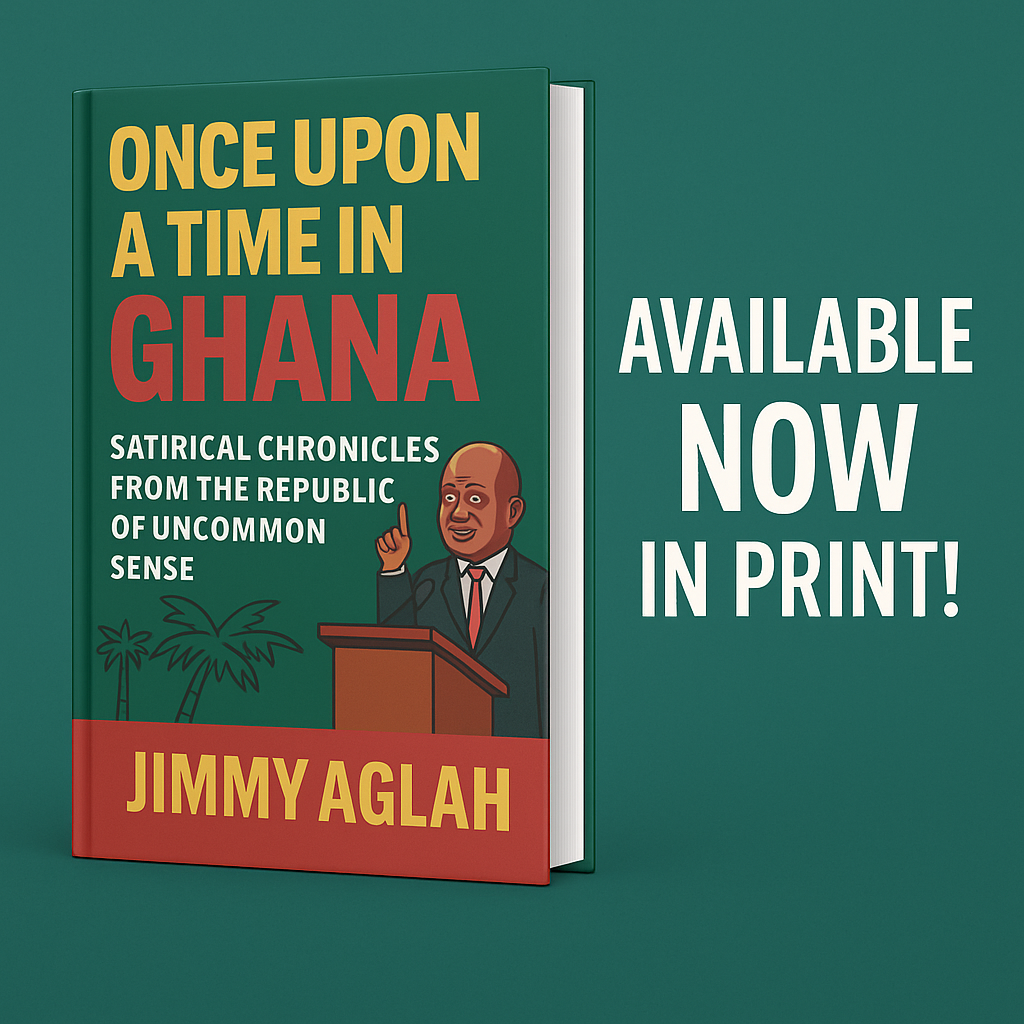
Once Upon a Time in Ghana: Satirical Chronicles from the Republic of Uncommon Sense
A witty, sharp, and richly Ghanaian collection of satirical reflections on power, public life, and the comedy of national contradictions.
Explore Once Upon a Time in Ghana
Frequently Asked Questions About the National Cathedral Audit Ghana Debate
Was the National Cathedral project fully cleared by audit?
No. Publicly available findings and summaries raised continued questions about procurement, value for money, public funding, and financial controls.
Why is the National Cathedral controversy still relevant?
It remains relevant because it touches on public accountability, state expenditure, procurement integrity, and the relationship between faith, politics, and governance in Ghana.
Is criticism of the National Cathedral anti-Christian?
No. Criticism of public process, spending, and oversight is a governance issue, not an attack on Christian faith.
What is the main issue at the center of the National Cathedral saga?
The central issue is whether a project presented as a national spiritual landmark was managed with sufficient transparency, procurement discipline, and accountability.