


TikTok Professors: Fame Without Foundations
TikTok Professors are rapidly redefining ambition in Ghana’s viral fame culture. In a generation where clout competes with credentials, the lecture hall is losing to the ring light. But what are the real consequences of this shift—on learning, credibility, and the kind of society we are quietly building?
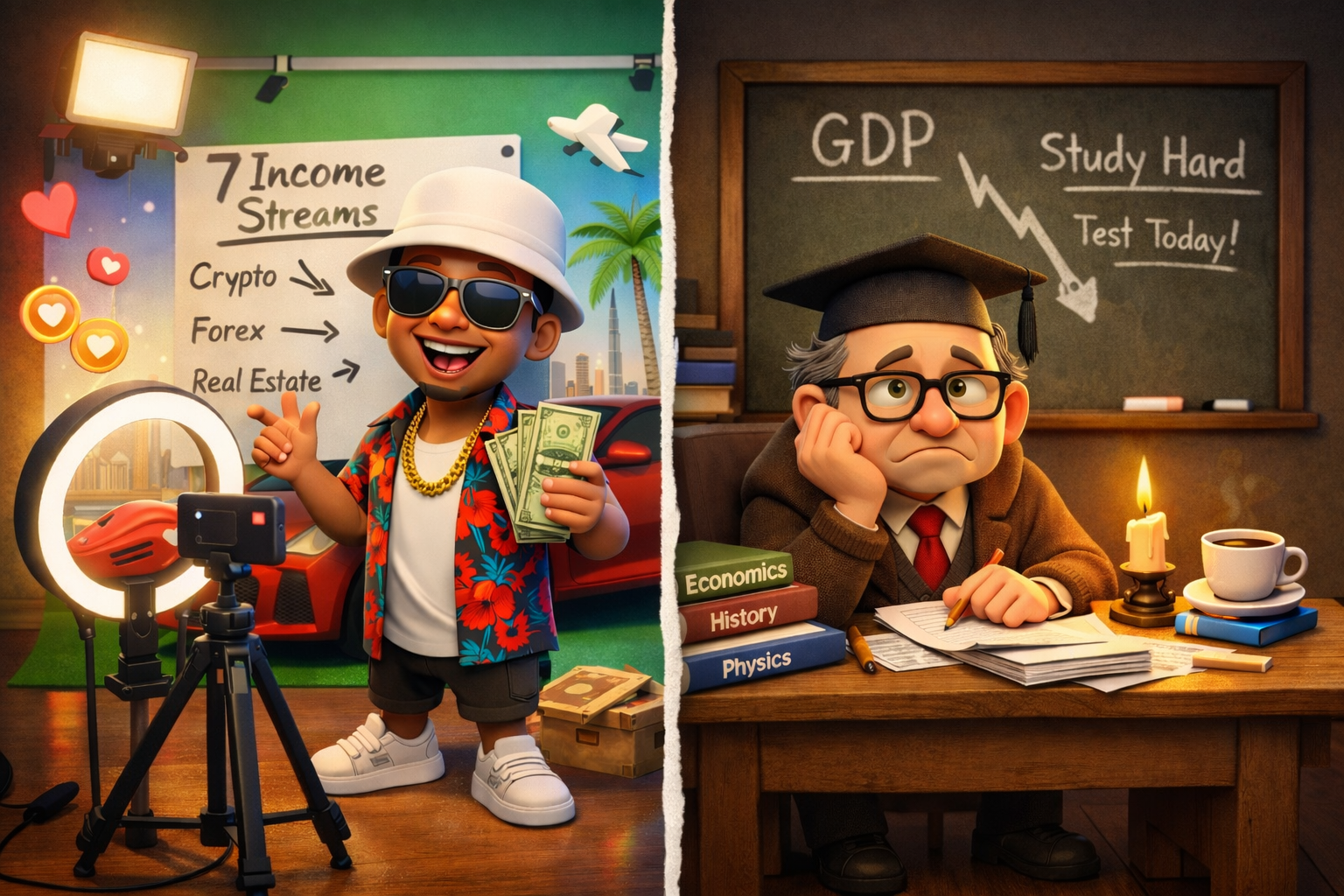
In the Republic of Uncommon Sense, wisdom now streams in 60-second clips—complete with affiliate links, borrowed confidence, and the occasional “Dubai trip” that looks suspiciously like a green screen with palm trees. Real professors lecture to half-empty halls; TikTok Professors teach “7 income streams” between dance skits and motivational captions.
“In the clout economy, influence has become the new certificate.”
What Is a TikTok Professor?
A TikTok Professor is a social media influencer who presents financial, lifestyle, or success advice in short-form video content—often emphasizing quick wealth, “7 income streams,” and visible symbols of success rather than formal training or verifiable expertise.
Some are genuinely knowledgeable communicators simplifying complex topics for a wider audience. Others are motivational DJs remixing borrowed ideas into catchy slogans—then charging admission via discount codes.
The Rise of TikTok Professors in Ghana
The rise of TikTok Professors is not happening in a vacuum. It is a response to real conditions—economic pressure, social media incentives, and a cultural hunger for “breakthrough” stories.
The economy is squeezing ambition
When jobs are scarce and salaries crawl like traffic at Kejetia on a Monday morning, young people naturally search for alternatives. If you’ve been sending CVs since the Akuapem hills were flat, a three-minute “how I made my first $10,000 online” video can feel like a miracle service—no offering bowl required.
Algorithms reward confidence, not competence
The platform does not ask: “Is this accurate?” It asks: “Will this be watched?” And in this digital marketplace, performance beats patience.
Shortcuts sell better than syllabi
Why read a 300-page textbook when a three-minute clip promises millionaire status before lunch? Why pay school fees when your data bundle can download “life hacks” in batches?
In this new syllabus, the TikTok Professor breaks down “high value man,” “soft life,” “side hustle,” and “how to spot a broke boy”—as if these are core courses for surviving the urban jungle. The whiteboard is your phone screen. The exam is the share button.
The Real Cost of Viral Fame Culture
Viral fame culture does not only entertain. It trains the mind to prefer speed over depth and vibes over verification. And when that mindset matures into adulthood, we don’t just get shallow content—we get shallow decisions.
“When applause becomes the grading system, critical thinking becomes an elective.”
Success becomes theatre
The TikTok Professor often shows “receipts”:
- A luxury car (sometimes rented)
- A luxury apartment (sometimes borrowed)
- A crypto dashboard (sometimes unverified)
- A “business trip” (sometimes a caption with confidence)
In fairness, not every influencer is a fraud. Many are entrepreneurs building real brands. The issue is the culture of appearance-first authority—where what you display is treated as proof, and what you can verify is treated as optional.
Education is framed as slow, boring, and outdated
Meanwhile, real professors sip lukewarm tea in half-empty lecture halls. They mark assignments by candlelight when the power goes—because scholarship does not stop when ECG decides to rest. But their audience has migrated: they’re now in the comment section debating the TikTok Professor’s latest “7 streams of income you can start with zero capital.”
Parents still tell their children: “Go to school, get a degree, find a good job.” But deep down, many young people know the new degree is clout—and the final exam is the moment your video hits a million views.
Misinformation spreads faster than mentorship
Financial advice is not seasoning you sprinkle on life like suya spice. Done poorly, it ruins people. The danger is not that TikTok Professors exist. The danger is when their advice becomes a national curriculum without quality control.
For a broader perspective on education’s role in sustainable development, see UNESCO’s education resources here:
UNESCO – Education.
Education vs Influencer Culture: Is It Either-Or?
To critique TikTok Professors is not to condemn innovation. Social platforms can educate. They can democratize knowledge. They can simplify complex subjects for people who were never given access to the language of power.
The question is not whether social media belongs in learning.
The question is whether performance has replaced preparation.
“The algorithm rewards performance—not patience.”
Practical Solutions: How to Learn Without Being Played
If Ghana is to benefit from digital learning without becoming a graduate school of shortcuts, then we need a culture shift—at home, in schools, and online.
1) Teach digital literacy as life literacy
Young people should learn how to evaluate claims: proof, track record, sources, and the difference between marketing and mentorship.
2) Normalize verification, not vibes
Before you repost: ask for clarity. If someone sells “7 income streams,” ask for what is legal, realistic, and sustainable. If they show a Benz, ask whether it belongs to them or belongs to the camera angle.
3) Encourage honest storytelling
We should celebrate content that admits: success takes time. Growth is messy. Failure is normal. This alone would reduce the pressure to fake a life for likes.
4) Promote blended mentorship
Let the real professors and credible entrepreneurs collaborate with creators to turn social media into a learning tool—not a shortcut factory.
Featured Snippet: 7 Warning Signs of a TikTok Professor
- Guaranteed wealth promises (“You’ll be rich in 30 days”)
- No verifiable track record beyond screenshots and captions
- Heavy reliance on rented symbols of success
- Affiliate link as the main lesson
- Urgency pressure (“Buy now or stay poor”)
- Dismissal of formal learning as useless
- Oversimplifying complex economics into slogans
Conclusion: Influence or Intelligence?
In the Republic of Uncommon Sense, the new professors don’t wear gowns—they wear streetwear. Their podium is a tripod. Their certificate is a blue tick badge next to their handle.
Sure, tomorrow you might discover the Benz was rented, the “crypto wallet” was a demo, and the landlord has been waiting since last quarter. But by then, the gospel has already been forwarded to the family WhatsApp group—with prayer hands emojis and “This guy is deep!” comments.
So next time you see a TikTok Professor schooling the masses while selling discount codes, clap for the hustle—then ask for evidence.
Because fame is loud.
But wisdom is quiet.

The Uncommon Sense Playbook
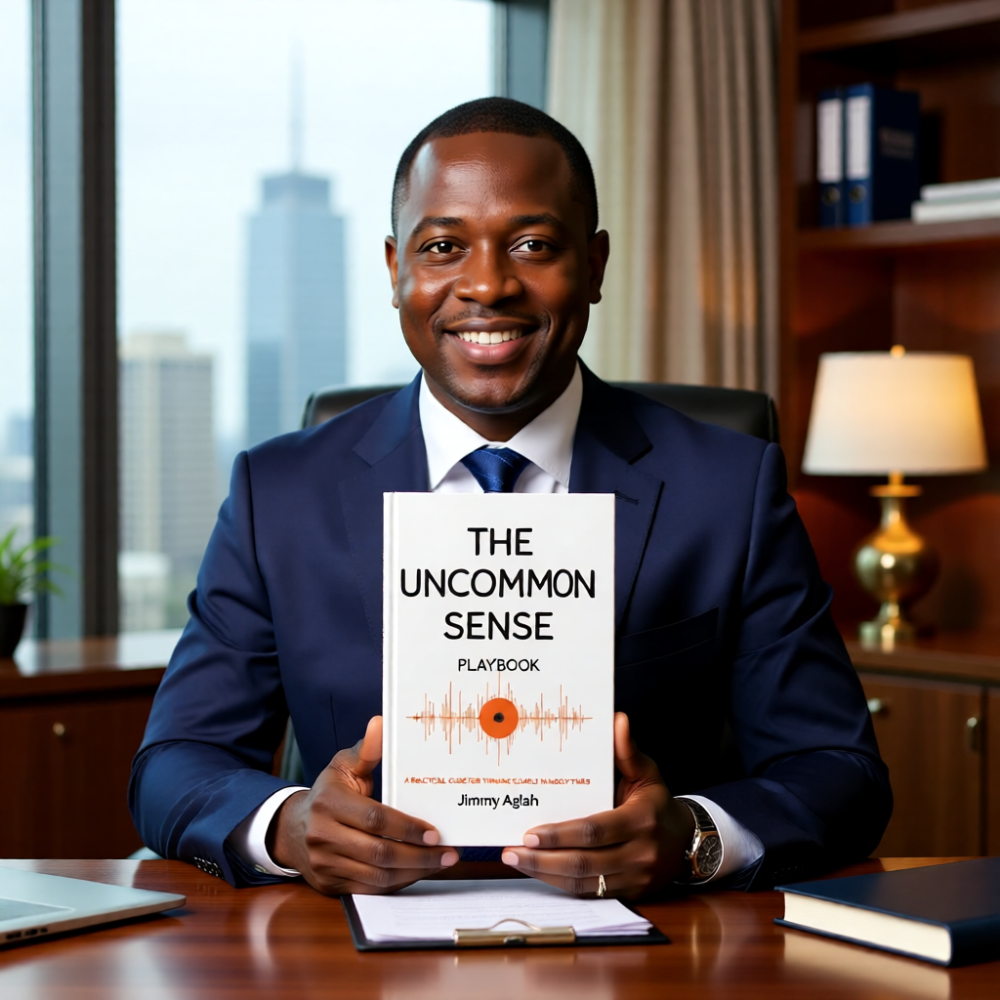
If you’re tired of shortcuts, noise, and viral “expertise,” this is your clarity toolkit. Learn how to think clearly in noisy times—and spot nonsense before it trends.
FAQ: TikTok Professors and Ghana’s Clout Economy
Are TikTok Professors qualified educators?
Not always. Some creators are experts; many are influencers sharing opinions. Verify expertise through credentials, track record, and transparent results.
Why are TikTok Professors popular in Ghana?
Economic pressure, youth unemployment, and the appeal of quick success make short-form “shortcut” content attractive—especially when it looks convincing.
Is influencer culture replacing formal education?
Not entirely, but it is reshaping perceptions of credibility and success. Many young people now value visibility as much as competence.
Can social media be a real learning tool?
Yes—when content is responsible, evidence-based, and transparent. Social platforms can complement education, but should not replace foundational learning.
Related Reads on RUS:
- Clout Economy Explained: When Attention Becomes Currency
- Shortcut Success: The National Addiction to “Quick Wins”
- Digital Literacy: How to Think Clearly Online
Hashtags: #TikTokProfessors #CloutEconomy #ViralFameCulture #DigitalLiteracy #GhanaYouth #EducationReform #InfluencerEconomy #RepublicOfUncommonSense