

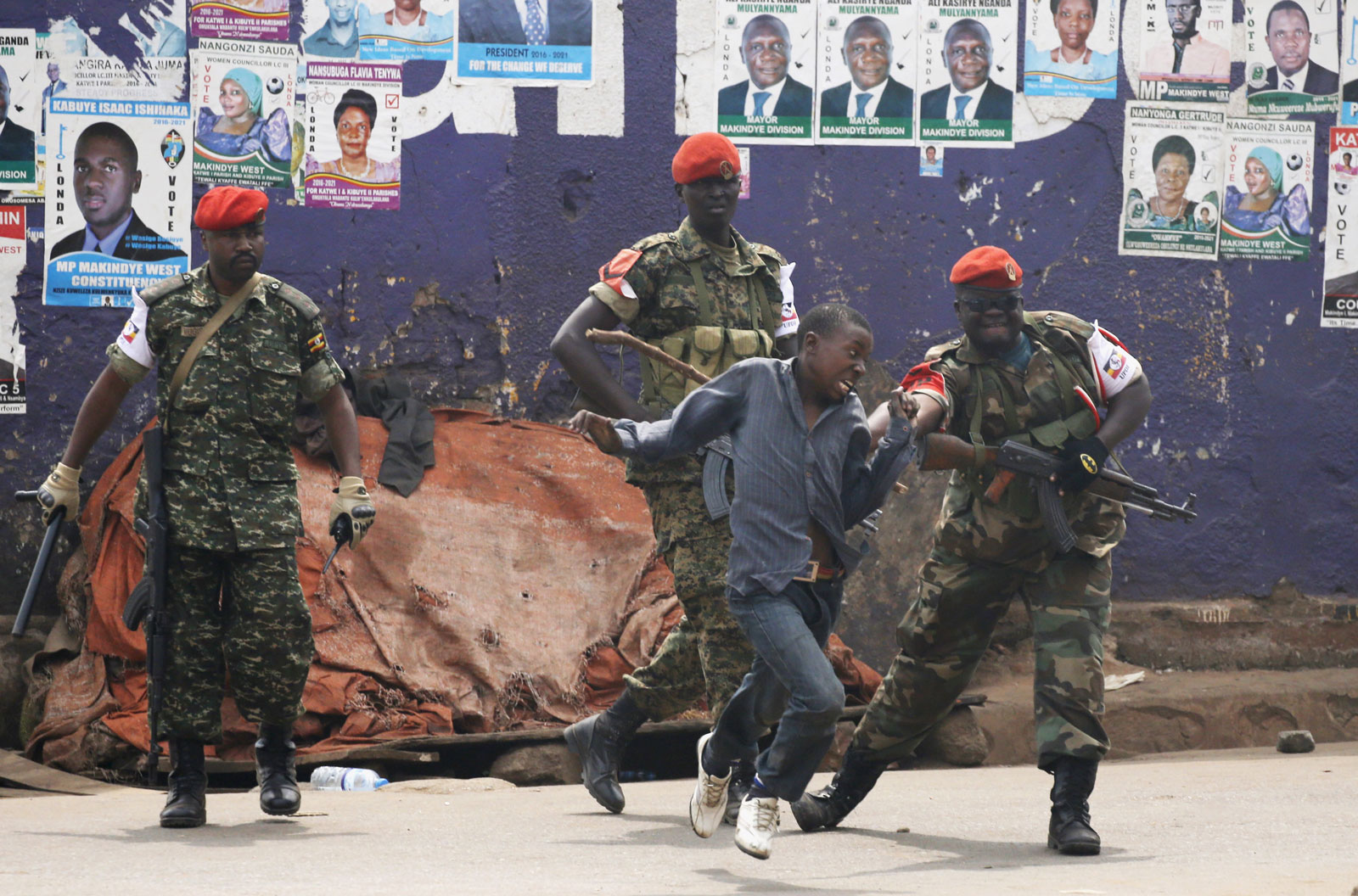

Uganda Fake Democracy: When Silence Learns to March
In Uganda, fake democracy has once again taken centre stage, reigniting an old African question:
why does repression travel loudly while condemnation travels quietly?
This satirical dispatch examines Uganda’s post-election climate, the reported intimidation of opposition circles,
and the continent’s uneasy habit of calling everything an “internal matter” until it matures into a continental embarrassment.
The Night Visit: When the State Forgets Daylight
We are told that armed men “searched” for opposition figure Bobi Wine. Searching is what you do for a missing goat,
not for a missing conscience. Searching implies patience; this one arrived with urgency and gun-metal confidence,
as if democracy had hidden under the bed and refused to come out.
The home, it seems, became the suspect. Phones were treated like weapons. Doors were treated like rumours—something to break
before it spreads. And somewhere in that chaos, the household learned a familiar African lesson:
when power cannot find the person, it interviews the peace.
The Election That Sleeps: When the Scoreboard Naps
Elections are meant to settle arguments. In many of our republics, elections simply reassign arguments—from citizens to courts,
from courts to security, from security to silence. Results are announced with the confidence of a loudspeaker,
while questions are handled with the tenderness of a tax audit.
When the internet takes a nap, democracy also sleeps. When observers are restricted, truth becomes a VIP guest—invited,
but not allowed to enter. And when the opposition complains, the nation is advised to “remain calm,”
the way you advise a goat to remain calm while you sharpen the knife.
These developments have drawn attention from global observers and journalists.
See
international reporting on Uganda’s post-election crackdown
for broader context on the allegations and responses.
Uganda’s experience is not isolated. Similar electoral tensions and post-election controversies have played out elsewhere
on the continent, including in
Tanzania’s 2025 election,
where stability was promised and silence was marketed as maturity.
Africa’s Quiet Choir: When Non-Interference Becomes Non-Conscience
The loudest sound in this story is not the boot. It is the silence after the boot.
Africa has perfected selective hearing: investment summits are heard clearly,
human rights faintly, and “stability” in full surround sound.
The phrase “internal matter” has become our continental lullaby.
It helps leaders sleep. It helps diplomats draft polite paragraphs.
It helps everyone avoid the awkward truth that today’s internal matter is tomorrow’s regional crisis.
This is the quiet infrastructure on which Uganda fake democracy survives—protected by diplomacy,
patience, and selective outrage.
We have seen similar political theatre closer to home, where dysfunction is normalised through patience,
queues, and carefully managed silence, as explored in our
political theatre in Ghana.
The General and the Keyboard: Modern Power’s Favourite Toy
Every era invents its own language of intimidation. Some preferred decrees.
Some favoured radio announcements. Our modern era prefers tweets, threats,
and denials—a choreography where power speaks, deletes, speaks again,
then wonders why people keep quoting it.
In folklore, the trickster brags loudly before tripping over his own slippers.
In modern governance, the trickster brags loudly, deletes the evidence,
and calls the fall “a misunderstood narrative.”
What Silence Votes For: The Ballot Nobody Admits to Casting
Silence is not neutral. Silence is a vote. It votes for the strongest voice in the room.
It trains the night to return. It teaches the boot that the floor will forgive.
This is how Uganda fake democracy survives—not through ballots alone,
but through fear, fatigue, and carefully managed quiet.
Uganda fake democracy is not just a Ugandan problem; it is an African mirror we keep walking past.
Let the Drums Remember Their Job
Satire laughs, yes—but it also records. It reminds power that ridicule ages faster than tyranny.
It reminds citizens that memory is a muscle: use it or lose it.
Uganda’s night cast a long shadow. Africa can pretend it did not notice,
or Africa can remember what drums are for.
History records not only who kicked the door,
but who heard the noise and turned up the radio.
Join the conversation:
- When does non-interference become quiet consent?
- Should African institutions speak louder when intimidation becomes policy?
- If this happened in your country, what response would you expect from the continent?


From the Republic’s bookshelf:
If you value stories that interrogate power, consequence, and the price societies pay for silence,
explore our fiction and satire from the Republic of Uncommon Sense.
— The Republic of Uncommon Sense