






The Republic of Uncompleted Dreams
Focus Keyphrase: Uncompleted buildings in Ghana
Once upon a time in the Republic of Uncommon Sense, we did not merely build houses. We built declarations.
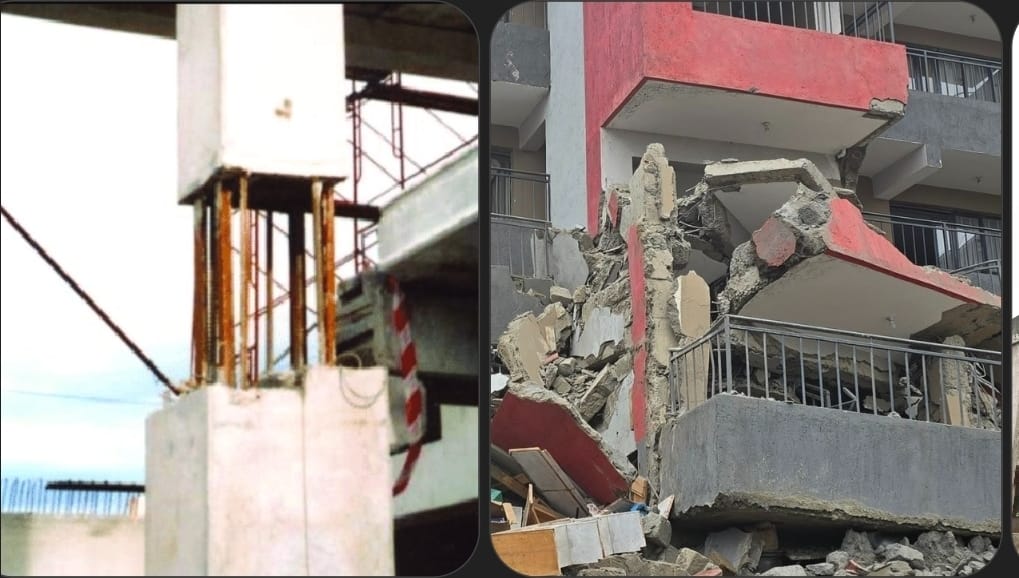
Across the nation stand proud monuments of optimism: pillars pointing toward heaven, iron rods stretching skyward like antennas searching for divine Wi-Fi.
These are not abandoned buildings. They are long-term vision statements.
And if you think this is only a building matter, please remember: the Republic has a proud tradition of starting big and finishing later. We’ve even done it with public debates. See related RUS commentary here.
The Architecture of Hope
An uncompleted building in Ghana is rarely seen as failure. It is a public announcement:
“I have started.”
Which, in our culture, is often interpreted as 70% of success.
We celebrate foundations. We organize slab ceremonies. We document excavation with enthusiasm. But the roof? The roof requires mathematics — and mathematics is less photogenic than concrete.
In the Republic, ambition often runs faster than arithmetic.
The Economics of Eternal Construction
The formula is familiar:
- Buy land.
- Start building.
- Assume funds will “continue.”
- Inflation enters the conversation.
- Cement prices rise.
- Iron rods behave like precious metals.
- The project moves gently into “Phase Two.”
Understanding Phase Two Culture
Phase Two is not a timeline. It is a belief system.
No one has seen it. Yet everyone trusts it. “Next year we will continue.” “After the bonus we will continue.” “When the season improves, we will continue.”
Meanwhile, exposed rods stand faithfully toward heaven, rusting with patience.
If your building is in Phase Two, the only thing that is complete is the explanation.
The Hidden Cost of Uncompleted Buildings in Ghana
- Frozen capital locked in incomplete construction projects
- Urban planning complications
- Security vulnerabilities
- Environmental and sanitation concerns
- Generational financial strain
Uncompleted buildings in Ghana are not merely physical structures. They are economic narratives. They reflect financing gaps, planning gaps, and sometimes optimism gaps.
According to the
World Bank’s Urban Development work,
weak urban systems and incomplete housing pathways can constrain household wealth accumulation and reduce city efficiency.
Why Uncompleted Buildings in Ghana Persist
Beyond humor, several structural factors explain why uncompleted buildings in Ghana continue to shape our skylines — from the roadside village to the gated estate.
1. Incremental Building Culture
Many families build gradually, funding each stage from savings, susu, side hustles, and occasional miracles. It reduces exposure to debt — but it also extends timelines indefinitely. In short: the house grows at the pace of the wallet.
And it’s not a small thing. In Ghana, “self-build” housing is widely recognised as the dominant mode of housing provision. For a deeper policy lens, see this University of Ghana/ISSER brief on self-build housing:
Building Ghana: Recognising and Supporting Self-Build Housing (ISSER).
2. Inflation Volatility
Budgeting becomes a comedy when cement prices, iron rod prices, and transport costs behave like they attend different economic conferences. You price today, you return tomorrow, and the hardware shop looks at you like you came with last year’s money.
3. Limited Access to Structured Housing Finance
Mortgage financing remains out of reach for many households, leaving people to self-finance projects slowly. Without long-term structured funding, construction becomes a marathon — and sometimes a family relay.
For context on Ghana’s housing finance ecosystem, see the country profile at
Centre for Affordable Housing Finance in Africa (CAHF): Ghana.
4. Social Signaling
Starting construction signals progress, stability, and status — even when completion remains distant. A foundation is proof of seriousness. A roof is proof of liquidity. Guess which one is easier to display?
Satire smiles at the phenomenon. Economics explains it.
A Gentle Proposal
What if we normalized:
- Planning before pouring
- Financing before foundation
- Phased development within verified income
- Completion before expansion
Laughter disarms denial. Reflection builds reform.
If we can finish the joke, perhaps we can finish the building.
Uncompleted buildings in Ghana are not a sign of failure. They are a reminder that ambition must be matched with structure, and hope must be partnered with planning.
FAQ: Uncompleted Buildings in Ghana
Why are uncompleted buildings in Ghana so common?
Because many households build incrementally, costs change quickly, and financing is often informal or unpredictable. The result is “Phase Two” culture: not abandoned, just postponed.
Is “Phase Two” always abandonment?
No. Many projects pause due to cashflow timing, school fees season, inflation spikes, or family emergencies. The building is waiting for money — not motivation.
How can families avoid stopping at foundation level?
Build to a verified budget, phase realistically, and treat completion as the real milestone. Foundation is a promise; roofing is proof.
Continue the Conversation
If this piece made you smile — and think — explore more sharp thinking in noisy times:

The Uncommon Sense Playbook is about clarity, planning, and disciplined thinking — the mental blueprint before the physical foundation.
If you are tired of “Phase Two thinking” in construction, business, or life, this is your upgrade: plan before you pour, calculate before you commit, and think clearly in noisy times.
Because sometimes the building is not the problem. The blueprint is.