


Xenophobia in South Africa: Are We Fighting the Wrong Enemy?
By Jimmy Aglah
Xenophobia in South Africa is not merely an immigration debate. It is a leaking roof being blamed on the rain. It is unemployment wearing the mask of patriotism. It is frustration, seasoned with politics, served hot to the nearest foreigner.
Let me tell you a small story.
A man’s roof began to leak. At first, it was only one drop. Then two. Then a steady rhythm — kpok… kpok… kpok — right in the middle of his living room.
Naturally, the man became angry.
But instead of fixing the roof, he chased the rain.
By evening, he was exhausted. His house was flooded. And the roof, the real culprit, was still sitting above him like a minister awaiting committee clearance.
That, in many ways, is where South Africa finds itself today.
At its core, xenophobia in South Africa is less about borders and more about broken systems.
Imagine this: A struggling young graduate wakes up, scans job listings, finds nothing, and by evening is convinced the problem is not the system — but the stranger next door.
When the economy coughs, the foreigner catches a cold.
What Is Xenophobia in South Africa?
Xenophobia in South Africa refers to hostility, discrimination, or violence directed at foreign nationals, especially African migrants. While it is often framed as an immigration issue, it is also a deeper socio-economic and governance challenge driven by unemployment, inequality, weak public services, and political scapegoating.
Xenophobia in South Africa and the Politics of Blame
South Africa is a nation with a glorious but painful history. It taught the world that prison could become presidency, that chains could become courage, and that forgiveness, properly managed, could become national architecture.
But as the elders say, “Even the river that forgets its source will eventually run dry.”
Today, the same country that was once carried on the shoulders of Africa appears increasingly uncomfortable with Africans at its doorstep. Zimbabweans are blamed for jobs. Nigerians are suspected of crime. Ghanaians and other Africans become part of the convenient queue of accusation.
Meanwhile, unemployment sits comfortably like a chief at a durbar — well-fed, well-known, and strangely immune to questioning.
Ah.
In the Republic of Uncommon Sense, we know this trick well: when the thief is too powerful to arrest, interrogate the visitor.
For a related reflection on blame, broken systems, and public anger, read
this RUS commentary on illegal mining and public accountability in Ghana.
The History: 2008, 2015, 2019 — A Repeated Script
This is not a new fever. The temperature has been rising for years.
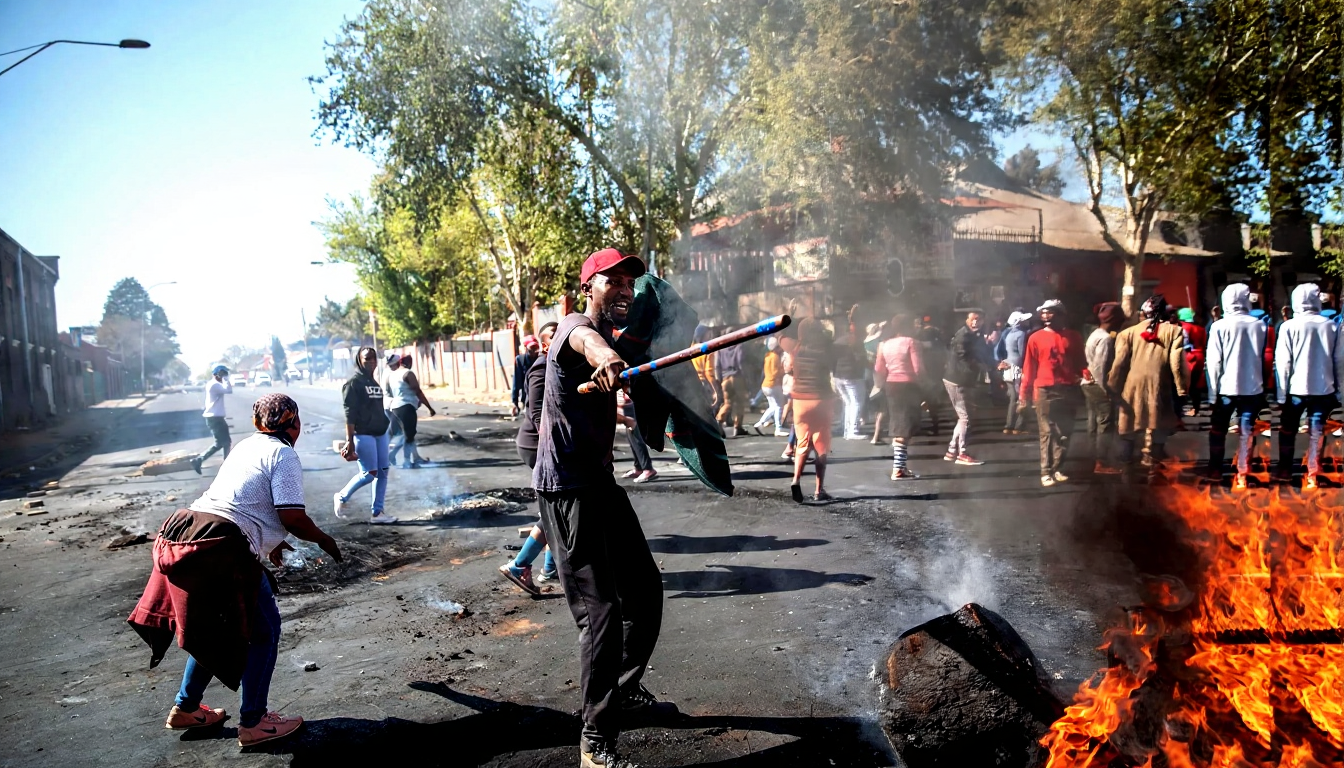
In 2008, xenophobic violence erupted in South Africa, leaving many foreign nationals attacked, displaced, and traumatized. In 2015, the anger returned. In 2019, the fire flared again, with Human Rights Watch documenting violence targeting African foreign nationals and their businesses in areas including Durban, Pretoria, and Johannesburg.
Read Human Rights Watch’s report on xenophobic violence in South Africa.
The pattern has become painfully familiar:
- Economic pressure rises.
- Citizens become frustrated.
- Foreign nationals are blamed.
- Violence erupts.
- Leaders condemn.
- Silence returns.
- The cycle repeats.
It is a national playlist nobody enjoys, yet somehow the DJ refuses to change the song.
The persistence of xenophobia in South Africa reflects deeper economic and governance challenges.
How Xenophobia Moved from the Street to the System
In earlier years, xenophobia was often seen through burning shops, street attacks, and mobs shouting at frightened migrants.
But now the matter has matured. It wears shoes. It speaks grammar. It appears in policy debates, political speeches, social media campaigns, vigilante movements, and public suspicion.
Groups such as Operation Dudula have pushed anti-migrant activism into public spaces, including actions targeting migrants in clinics and communities. AP News has reported on incidents where migrants were blocked from accessing public health clinics, showing how the issue has moved beyond rhetoric into everyday survival.
Read AP News on anti-migrant actions at South African clinics.
Once a society begins to ask for identity documents before compassion, something has gone spiritually bankrupt.
When humanity requires paperwork before mercy, the problem is no longer immigration. It is moral confusion.
The Dangerous Equation: Foreigner Equals Criminal
The most dangerous thing about xenophobia is not only violence. It is simplification.
Slowly, a false equation forms:
- Foreigner equals criminal.
- Foreigner equals job thief.
- Foreigner equals pressure on services.
- Foreigner equals national problem.
It is simple. It is emotional. It is politically useful. And it is intellectually lazy.
Because if the problem is the foreigner, the solution is easy: remove the foreigner.
But if the problem is the system, then we must discuss jobs, education, healthcare, governance, corruption, economic structure, local leadership, and national planning.
And those topics do not fit neatly on a placard.

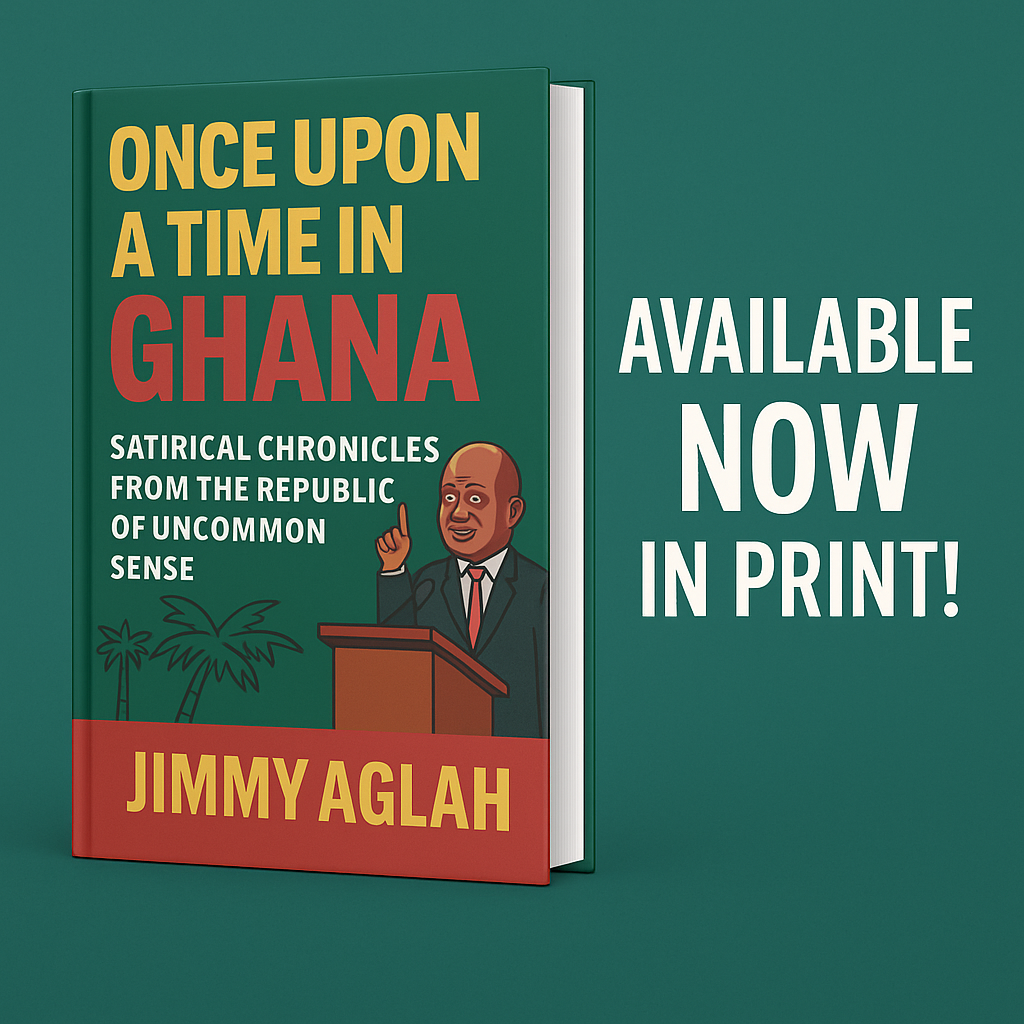
Enjoying This Satirical Reflection?
If this piece made you pause, laugh, and think twice, you will enjoy Once Upon a Time in Ghana: Satirical Chronicles from the Republic of Uncommon Sense — a witty journey through the land where common sense sometimes needs police escort.
Cause: Why Xenophobia Keeps Returning
Xenophobia in South Africa continues because it feeds on real pain but directs that pain at the wrong target.
1. Unemployment
When jobs are scarce, people look for explanations. Unfortunately, the easiest explanation is often the outsider. But if every foreigner left tomorrow, would jobs appear on Monday morning wearing polished shoes?
2. Inequality
South Africa remains one of the most unequal societies in the world. Where inequality is loud, anger does not need a microphone. It only needs a face.
3. Weak Public Services
When clinics are overcrowded, schools are strained, and housing is inadequate, migrants are often blamed for pressure they did not create alone.
4. Political Opportunism
There is no cheaper political fuel than public anger. A leader who cannot fix the roof may still win applause by pointing at the rain.
5. Historical Amnesia
South Africa did not defeat apartheid alone. Many African countries carried its struggle in different ways — diplomatically, morally, financially, and politically.
Today, when fellow Africans are told to “go home,” history must be sitting somewhere, shaking its head like an old headmaster watching his best student misbehave.
This is not the first time we have mistaken symptoms for causes. See
The Rise of Uncommon Sense for a broader perspective.
Impact: What Xenophobia Destroys
The long-term cost of xenophobia in South Africa is not only social division but economic stagnation.
Xenophobia does not only harm foreigners. It harms the host nation too.
It damages social trust. It weakens regional cooperation. It frightens investors. It divides communities. It turns African unity into funeral cloth — worn only during speeches and summits.
Above all, it distracts from the real work.
A nation cannot punch its way into prosperity by attacking the vulnerable. You cannot build a strong economy with weak empathy. You cannot create jobs by burning shops. You cannot repair governance with mob suspicion.
A country that fights the wrong enemy will celebrate victory over the wrong problem.
Featured Snippet: 7 Ways to Break the Cycle
To reduce xenophobia in South Africa, policymakers and communities must address both migration management and deeper structural failures.
- Create jobs at scale through industrial policy, entrepreneurship support, and skills development.
- Strengthen immigration systems so documentation, enforcement, and rights protection are credible.
- Protect migrants and citizens equally under the rule of law.
- Stop political scapegoating and punish incitement against foreign nationals.
- Invest in local services including housing, healthcare, schools, and policing.
- Promote African civic education that reminds citizens of shared liberation histories.
- Build community-level conflict resolution systems before anger becomes violence.
To address xenophobia in South Africa, the focus must shift from blame to reform.
Pause and reflect: If you enjoy thought-provoking satire that challenges conventional thinking, you’ll love
Once Upon a Time in Ghana.
Solution: Fix the Roof, Stop Chasing the Rain
The way out is not denial. It is not sentimental Pan-African poetry alone. It is not singing unity songs while citizens feel abandoned.
The way out is hard, practical, and necessary.
Fix the system, not the scapegoat.
Strengthen institutions, not suspicions.
Create opportunity, not enemies.
Manage immigration fairly, not violently.
Tell the truth, even when the truth refuses to clap for politicians.
Because the foreigner is not the architect of South Africa’s inequality. The migrant did not design unemployment. The stranger did not build the leaking roof.
As the proverb says, “The lizard that ruins its own home has no right to complain about the weather.”
If you’re serious about thinking beyond surface-level narratives, explore
The Uncommon Sense Playbook.
The African Irony
There is a tragedy here that must not be ignored.
South Africa once needed Africa. Africa answered.
Ghana stood. Nigeria stood. Zambia stood. Tanzania stood. Many others stood in their own way.
Today, some Africans in South Africa are being treated not as brothers and sisters, but as intruders at a family meeting.
And yet, the family compound is burning.
When brothers begin to treat brothers like strangers, the problem is no longer at the border. It is at the foundation.
Final Word: The Problem Still Lives
Until the root causes are addressed, xenophobia in South Africa will remain a recurring symptom of a deeper crisis.
Let us end where we began.
The roof is still leaking.
The man is still chasing the rain.
The living room is still flooding.
And the real problem, untouched and unbothered, is sitting in the corner sipping tea.
That is the danger of xenophobia. It gives people the emotional satisfaction of action without the structural discipline of reform.
It defeats the wrong enemy.
And the real problem lives to fight another day.
Frequently Asked Questions
What is xenophobia in South Africa?
Xenophobia in South Africa refers to hostility, discrimination, or violence directed at foreign nationals, especially African migrants, often linked to unemployment, crime fears, and pressure on public services.
Why does xenophobia keep happening in South Africa?
It keeps recurring because deep economic frustration, inequality, weak public services, and political scapegoating often redirect public anger toward migrants instead of structural problems.
Is xenophobia only an immigration issue?
No. Immigration management is part of the discussion, but xenophobia is also a governance, economic, social cohesion, and leadership issue.
How can South Africa reduce xenophobia?
South Africa can reduce xenophobia by creating jobs, improving public services, enforcing immigration laws fairly, punishing violence, and promoting honest leadership that does not scapegoat migrants.


Think Clearly in Noisy Times
In a world where outrage travels faster than wisdom, The Uncommon Sense Playbook: Thinking Clearly in Noisy Times offers practical reflections for readers who want clarity, courage, and good judgment in public life.
Get the Playbook here: Download The Uncommon Sense Playbook
Final CTA: If this article spoke to you, share it with someone who believes Africa’s problems deserve deeper thinking than convenient blame. And while you are here, explore more essays from the Republic of Uncommon Sense — where satire shakes hands with truth, and both refuse to leave quietly.