








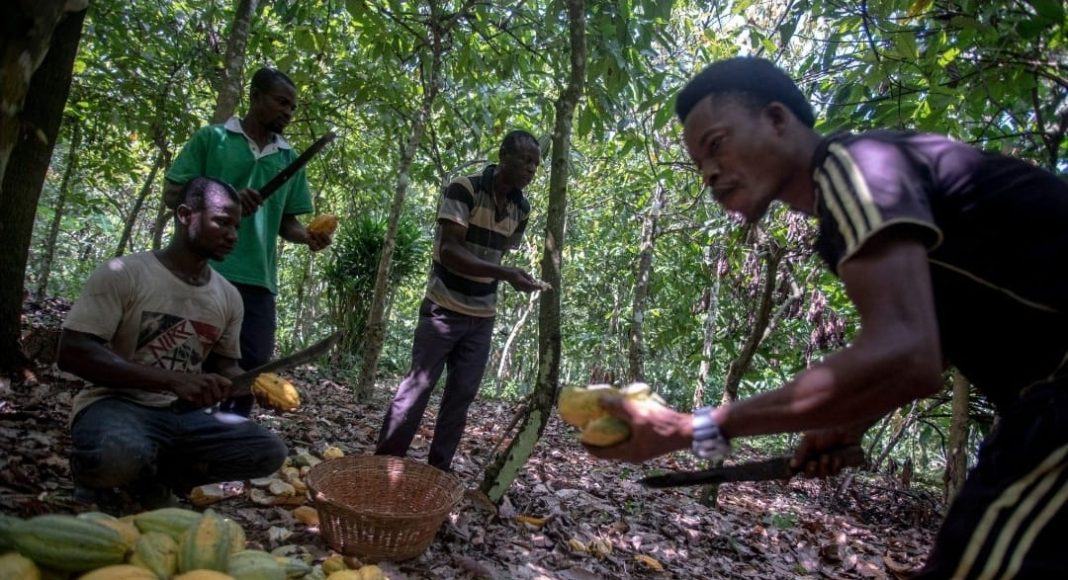

For years, the system has been praised for protecting farmers from sudden price collapses and helping the state plan revenue with fewer surprises. But when international cocoa prices surge to record highs, the same structure that once looked like wisdom can begin to feel like a locked door—especially to farmers watching global numbers rise while local prices remain restrained.
Quick context: If you want the bigger picture behind Ghana cocoa price cuts, start with the pillar analysis above and then return here for the forward sales breakdown.
What Is the COCOBOD Forward Sales Model?
The COCOBOD forward sales model is a pre-financing and pre-selling system in which Ghana’s cocoa regulator sells a significant portion of anticipated cocoa output ahead of harvest. These contracts are negotiated months in advance with international buyers, often before the market reveals its next dramatic move.
By locking in prices early, Ghana reduces exposure to sharp global market swings. In stable markets, this approach offers predictability for both national revenue and farmer payments.
According to international commodity data reported by the World Bank Commodity Markets Outlook, cocoa prices have experienced significant volatility and supply-driven fluctuations in recent years. In that kind of environment, forward contracts can function like an economic seatbelt—tight, sometimes uncomfortable, but designed to reduce injury in a crash.
Instead of reacting to daily market movement, the COCOBOD forward sales model creates structured income flows that support:
- National budget planning
- Debt servicing obligations
- Input subsidy programs
- Farmer price stability
The goal is not speculation. The goal is insulation.
Why Ghana Uses the COCOBOD Forward Sales Model
Ghana’s economy remains deeply tied to cocoa exports. Revenue predictability matters, especially when public spending and financing commitments are built on expected export receipts.
1. Revenue Stability
Forward contracts allow the state to forecast cocoa export income before the harvest season begins. This stability supports macroeconomic planning, public spending projections, and foreign exchange management.
2. Farmer Income Protection
If global cocoa prices fall suddenly, farmers are protected because prices were locked in earlier. This reduces income shocks in rural communities and helps keep farm-gate pricing steadier than the global rollercoaster.
3. Pre-Financing Benefits
Forward selling also enables COCOBOD to secure syndicated loans backed by anticipated cocoa sales. These funds support fertilizer distribution, logistics, quality control, and purchasing operations nationwide.
In calm markets, the COCOBOD forward sales model is widely viewed as prudent economic management.
Why Farmers Question the COCOBOD Forward Sales Model
Tension emerges when global cocoa prices surge dramatically after forward contracts have already been locked in. Ghana cannot immediately benefit from the upward movement, and farmers begin to question why local producer prices do not rise at the same pace as international benchmarks.
“When markets rise sharply, prudence can look like missed opportunity.”
Farmers are not always rejecting the system entirely. More often, they are asking whether the COCOBOD forward sales model includes enough flexibility during extraordinary global price rallies—and whether the benefits of stability are being communicated clearly and shared visibly.
Does the COCOBOD Forward Sales Model Contribute to Ghana Cocoa Price Cuts?
The relationship is indirect but significant.
When global cocoa prices rise beyond contracted levels, Ghana’s previously negotiated forward contracts can limit immediate adjustment capacity. As a result, producer prices may appear restrained relative to international market headlines, creating public frustration and political pressure.
This dynamic contributes to debates surrounding Ghana cocoa price cuts and broader pricing adjustments. However, forward selling does not automatically reduce prices. Instead, it moderates both upward and downward volatility—trading rapid gains for predictability.
The Smuggling Risk Factor
Price differentials between Ghana and neighboring Côte d’Ivoire can create incentives for cross-border cocoa trade. When farmers believe domestic pricing lags far behind regional alternatives, smuggling pressures increase—especially in border communities where economic choices are practical before they are patriotic.
The COCOBOD forward sales model does not cause smuggling by itself. However, inflexible timing in price adjustments may unintentionally widen temporary gaps, encouraging unofficial channels that reduce official inflows and complicate national revenue planning.
Related reading: Explore how price gaps fuel Ghana cocoa smuggling (supporting cluster article).
Can the COCOBOD Forward Sales Model Be Improved?
The debate is not about abandoning structure. It is about strengthening trust through transparency and targeted flexibility.
Possible reforms to the COCOBOD forward sales model could include:
- Clearer communication of forward contract timelines and pricing logic
- Partial floating mechanisms during exceptional global price spikes
- Mid-season review clauses where feasible
- Improved transparency around producer price formulas and cost components
Greater visibility into how the COCOBOD forward sales model operates may rebuild confidence—especially when farmers feel disconnected from global gains.
Is the COCOBOD Forward Sales Model Still Fit for Today’s Markets?
Global commodity markets have become more volatile and information now travels faster than ever. Farmers monitor international cocoa prices in real time through phones, radio analysis, and social media headlines. When global prices surge dramatically, expectations shift instantly—even before policy explanations catch up.
The COCOBOD forward sales model was designed in an era where market information moved slower. Today, speed and transparency influence perception as much as actual income. This reality raises legitimate questions about whether Ghana should add adaptive tools that allow the country to benefit more efficiently during extraordinary global rallies while still preserving stability during downturns.
Revisiting the model does not necessarily mean abandoning it. It may simply require modern mechanisms that match today’s market pace without sacrificing Ghana’s hard-won reputation for quality cocoa and structured purchasing systems.
FAQ: COCOBOD Forward Sales Model
What is cocoa forward selling?
Cocoa forward selling is the practice of pre-selling future harvest output through advance contracts to stabilize income and manage risk.
Why does Ghana use the COCOBOD forward sales model?
Ghana uses it to reduce exposure to global price volatility, stabilize national revenue, and protect farmers from sudden market crashes.
Does forward selling prevent Ghana from benefiting from price surges?
It can limit immediate gains if prices rise sharply after contracts are locked in, but it also prevents deeper losses when prices fall.
Can the COCOBOD forward sales model be reformed?
Yes. Reforms could introduce flexibility mechanisms, stronger transparency, and clearer communication between policymakers and farmers.
In the broader cocoa ecosystem, the debate is less about blame and more about balance. The COCOBOD forward sales model was built for stability. But in times of extreme market shifts, even stability can feel restrictive.
The real question is not whether forward selling is good or bad.
The real question is whether it is sufficiently adaptive.

Understanding Ghana’s Cocoa Economics Requires Clear Thinking
The debate around the COCOBOD forward sales model is not just about contracts. It is about policy clarity, farmer trust, and Ghana’s ability to balance stability with fairness when global prices swing wildly.
If you value structured thinking over noise, explore deeper breakdowns and practical clarity inside the Republic of Uncommon Sense.