






The Hunter, the Antelope, and OSP Prosecutorial Powers in Ghana
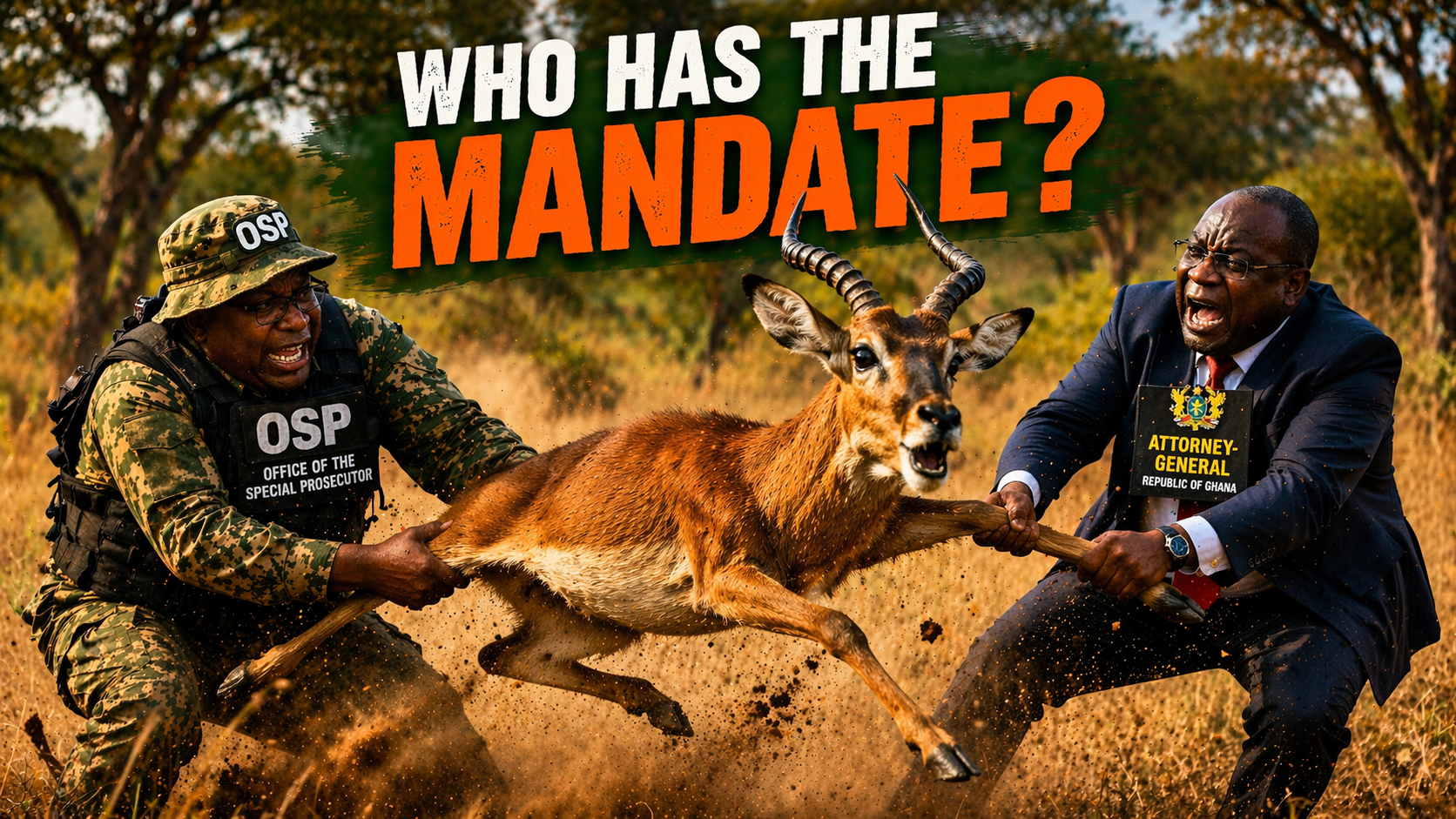
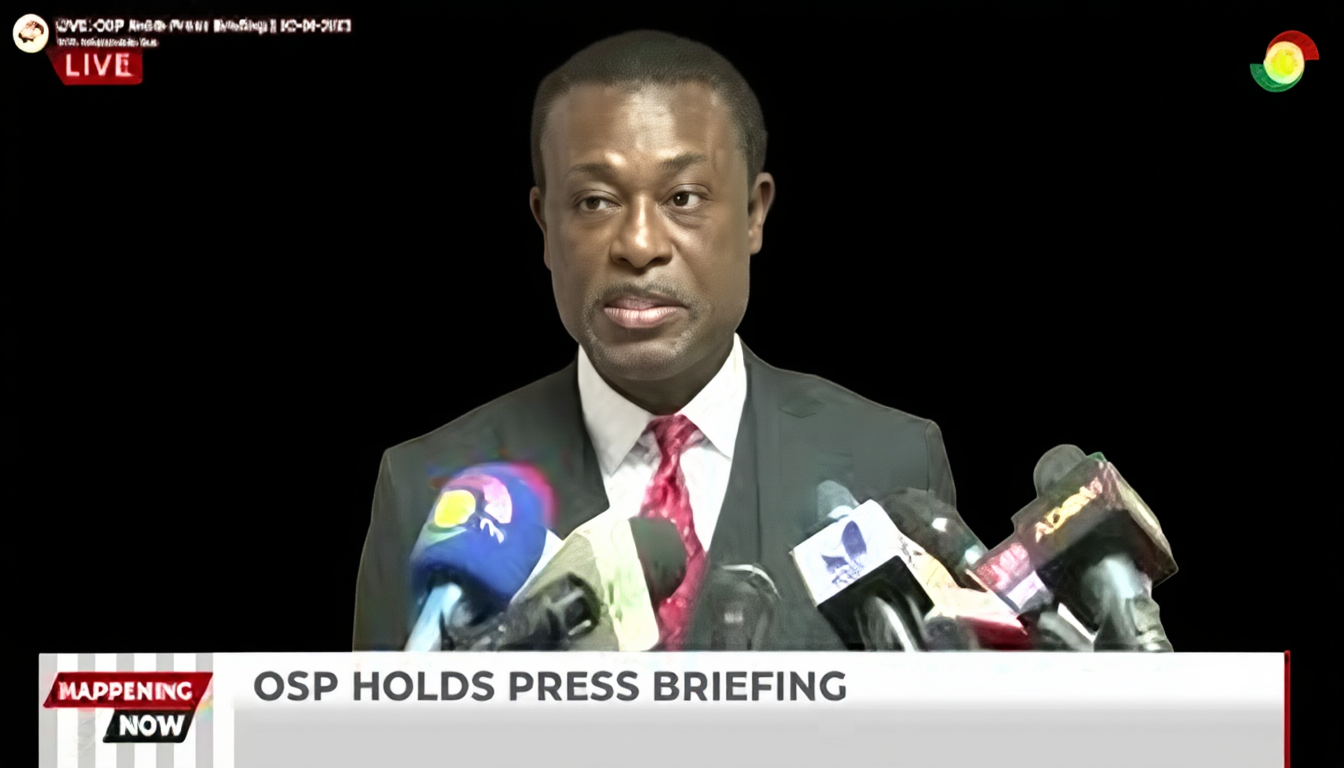
Once upon a time in the Republic of Uncommon Sense, a hunter was appointed. Not a ceremonial hunter who appears at festivals with borrowed confidence and a decorative gun slung over his shoulder. No. This one came with mandate, mission, and the full emotional investment of a nation tired of hearing that corruption was “being dealt with” in the same way a Ghanaian landlord deals with a leaking roof—by pointing at it every morning and calling it progress. This, we were told, was the man for the job. And so began the latest chapter in the national debate over OSP prosecutorial powers.
His assignment looked simple enough on paper: find the antelope, chase the antelope, catch the antelope. But in Ghana, as every village drummer knows, the problem is never the dance; it is the drummer behind the curtain. This antelope was no ordinary forest animal. It had spent years leaping over accountability, grazing peacefully on public opportunity, and vanishing the very moment someone coughed the word “investigation.” Previous hunters had pursued it with enthusiasm, but somewhere between the press conference and the prosecution, the trail often grew cold. The antelope, as usual, remained available for future reforms.
From the Republic bookshelf
If you enjoy satire that pokes power in the ribs and asks difficult questions with a smile, explore these two titles from the Republic of Uncommon Sense.

The Uncommon Sense Playbook
A sharp guide to thinking clearly in noisy times.
Get the book here
Once Upon a Time in Ghana: Satirical Chronicles from the Republic of Uncommon Sense
Witty, biting, and painfully familiar.
Read more here
So when the Office of the Special Prosecutor entered the forest, the people paid attention. Here, at last, was a hunter introduced to us not as an observer, not as a commentator, not as a chairman of a fact-finding committee with tea and biscuits, but as a man expected to pursue corruption all the way to its front door. For once, the forest itself seemed uneasy. Even the antelope adjusted its timetable. Files moved. Cases emerged. Names appeared. The old silence that usually wraps powerful wrongdoing like kenkey leaves around hot corn dough began to loosen.
Then came the dramatic moment. The hunter tracked the antelope, closed in, cornered it, steadied his hand, and prepared to act. The Republic held its breath. This was the scene we had all been promised: not another lamentation about corruption, but consequences. Not another sermon, but a strike. And then, from somewhere between the Constitution, the court, and the long corridor of public power, came the voice that has become Ghana’s unofficial national soundtrack: “Please seek approval before proceeding.”
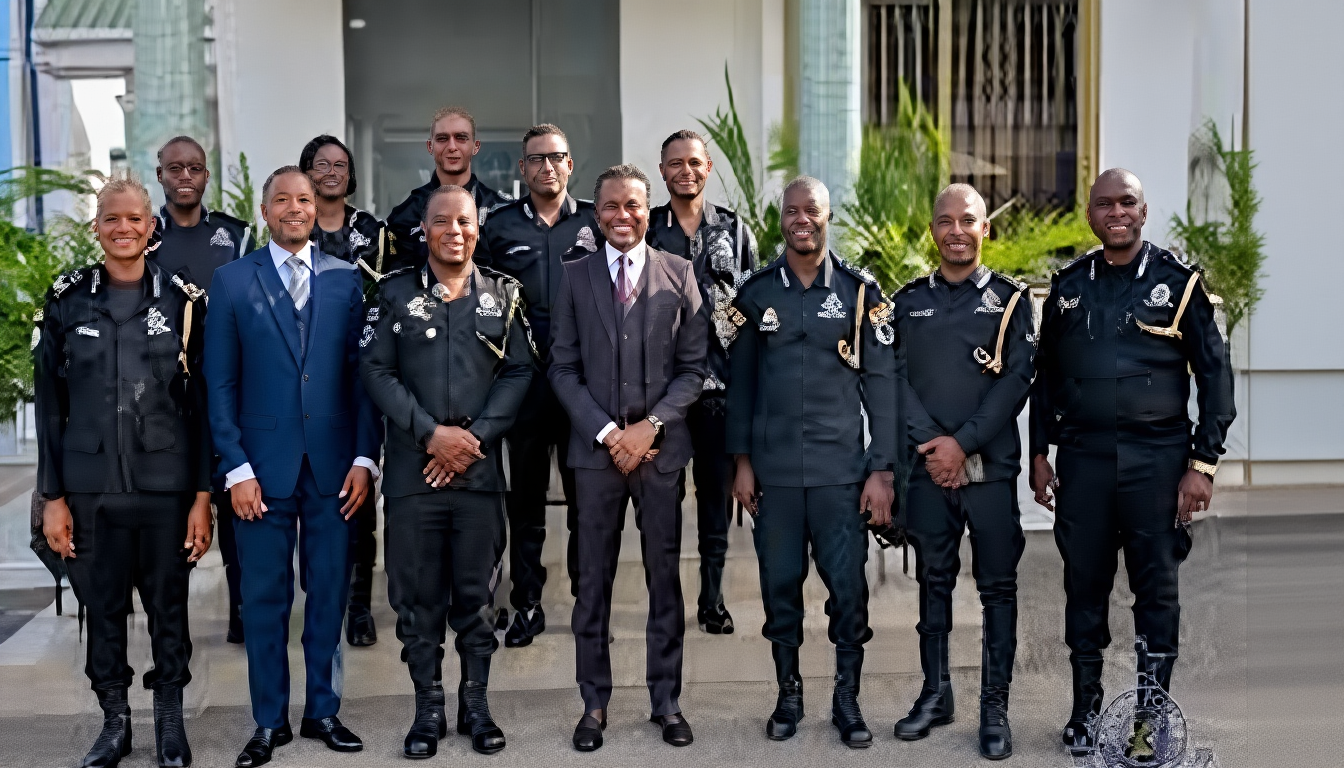
Now, that is where the issue of OSP prosecutorial powers stops being a legal footnote and becomes a full-grown Ghanaian drama. Because the problem is no longer whether the hunter can see the antelope. He can. It is no longer whether he can track it. He has. The problem is whether, after all the effort, sweat, evidence, and expectation, he can actually pull the trigger without first writing a respectful covering letter to headquarters. In this case, headquarters is the Attorney-General, whose constitutional role under Article 88(4) has suddenly become the center of the national conversation.
At the heart of this debate is one question: should OSP prosecutorial powers be exercised independently, or supervised within existing constitutional structures?
And while that debate walks majestically through the courts in legal robes and proper English, the antelope is doing what antelopes have always done best. It is running. Not frantically. Not nervously. Not even with the panic of a creature in danger. It is running with the cool, measured confidence of something that knows our national weakness for procedure. In Ghana, delay has rescued many things: weak projects, confused policies, and, on some blessed occasions, endangered reputations. Why should the antelope not trust the same system that has served its cousins so faithfully?
To be fair, those defending the current legal interpretation are not talking nonsense. They remind us that the Constitution is not a suggestion box. It is the rulebook. If prosecutorial authority belongs to the Attorney-General, then perhaps the OSP was never meant to be a free-range hunter in the first place. Perhaps, they say, he was always intended to be more of a specialist tracker—highly trained, highly motivated, but still required to report to the constitutional owner of the gunpowder. It is a respectable argument. But respectable arguments can still produce politically inconvenient optics.
Because governance is not only about legality. It is also about credibility. It is about what people believe when they watch institutions at work. And what many citizens believed was that the Office of the Special Prosecutor was built precisely to solve an old Ghanaian problem: the awkwardness of expecting a political office to prosecute the politically connected with the same enthusiasm it reserves for the politically expendable. That, after all, was part of the promise. The OSP was introduced as a remedy to hesitation, not as a decorative addition to it. In the minds of many citizens, OSP prosecutorial powers were not supposed to be ornamental. They were supposed to mean something.
Now the courts appear to be speaking in two voices. One judicial position suggests the hunter may proceed. Another suggests the hunter may track but not strike. Same country. Same constitutional order. Same citizens buying data bundles to follow the story in disbelief. Somewhere, the Supreme Court sits like the final elder in a family meeting, expected to settle whether the child has been naughty, misunderstood, or merely caught too close to the truth. Until then, the public is left in that dangerous place where uncertainty and cynicism share a room.
And this is where satire shakes hands with sorrow. For years, Ghanaians have been told that corruption is a serious national disease. We have heard the speeches, the warnings, the pledges, the anti-corruption weeks, the anti-corruption months, and perhaps one day, if the budget permits, the anti-corruption decade. So when an institution rises with promise and then appears to be losing its bite just as the game becomes interesting, public disappointment is not mere melodrama. It is a reaction to a familiar national pattern: bold beginnings, cautious middles, and inconclusive endings. That disappointment deepens when people begin to suspect that the argument over OSP prosecutorial powers may ultimately determine whether anti-corruption rhetoric becomes anti-corruption reality.
At moments like this, one is tempted to recommend an honest renaming exercise. If the Office of the Special Prosecutor can investigate but must pause at the edge of prosecution, perhaps we should save ourselves the confusion and call it the Office of Special Tracking. Or the Bureau of Advanced Pursuit. Or, in plain Republic language, the Department of Evidence Gathering and Forwarding. At least then the antelope will know exactly what kind of hunter is entering the forest, and the public will not confuse movement with outcome.
There is an old truth in our part of the world: when the drummer changes rhythm in the middle of the dance, somebody will stumble. In this case, the stumbling is not merely institutional. It is emotional. Citizens who thought the forest had finally acquired a serious hunter are now wondering whether the gun was ever loaded. They are asking whether the teeth they saw were real or detachable. They are asking, with increasing impatience, whether justice in Ghana is meant to be pursued or merely announced.
So here we are. The hunter remains in the forest. The antelope remains in motion. The Attorney-General remains constitutionally important. The Supreme Court remains the final oracle. And the people remain where they have so often been in matters of public accountability: hopeful, watchful, and slightly suspicious. Until clarity is provided, the controversy around OSP prosecutorial powers will continue to shape public trust in Ghana’s anti-corruption efforts. In any system where the hunter must seek permission before pulling the trigger, the antelope does not run in fear. It runs on schedule.
Resource Box
About the Author: Jimmy Aglah is a media executive, writer, and satirist, and founder of Republic of Uncommon Sense, where wit, irony, and cultural insight are used to interrogate public life and power.
Further Reading:
Related reading on RUS:
External references: