




Ghana Cocoa Price Cuts: COCOBOD vs Farmers
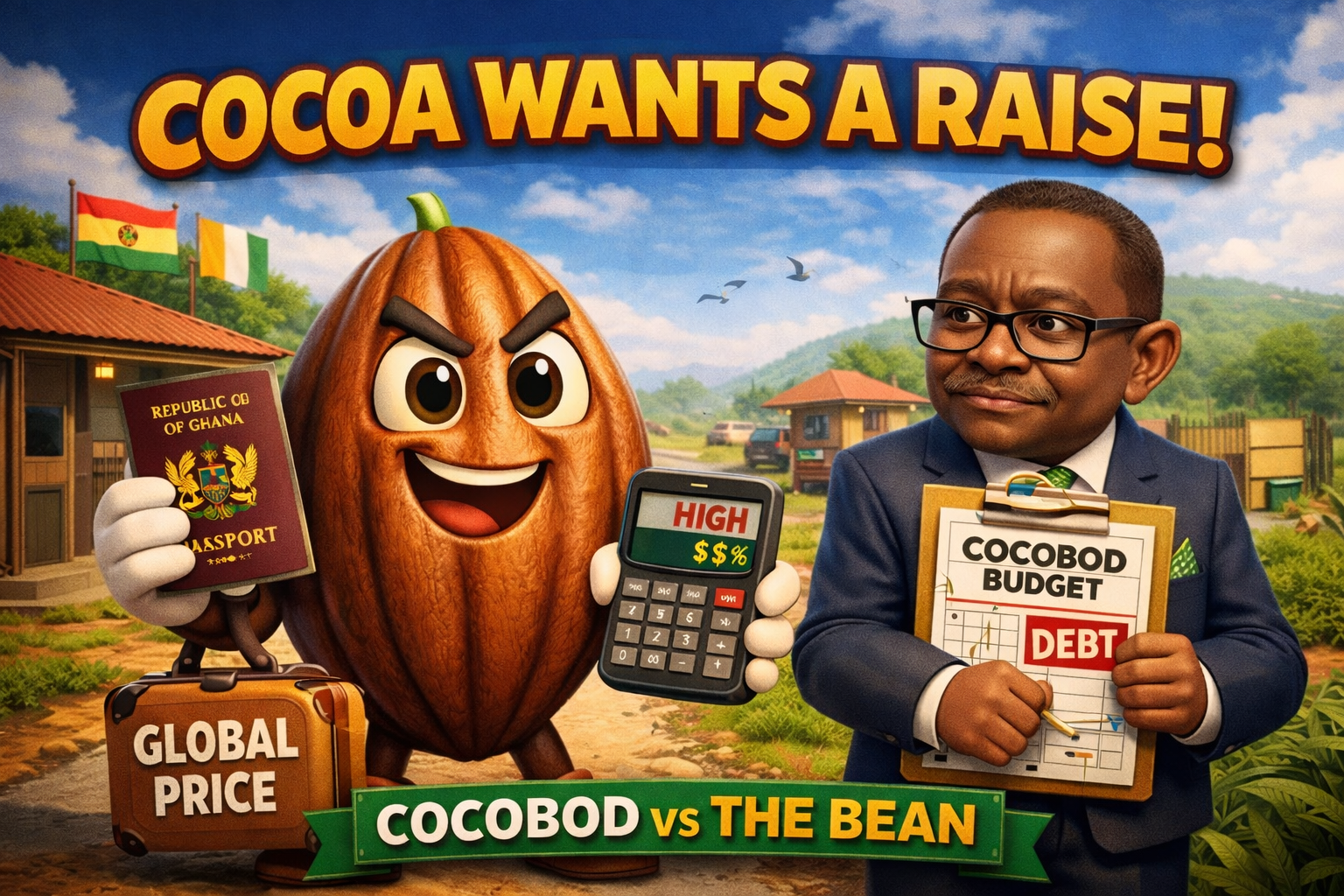
Ghana cocoa price cuts have ignited fresh tension across the cocoa belt, as farmers question COCOBOD’s pricing strategy amid soaring global markets. What once seemed like a technical adjustment has evolved into a national economic debate stretching from farm gates to policy briefings in Accra.
Global cocoa prices have surged to historic highs. Meanwhile, the producer price offered by the Ghana Cocoa Board (COCOBOD) remains measured, cautious, structured. Farmers are asking difficult questions. Economists are giving careful answers. And somewhere between the spreadsheet and the sack of beans, trust has begun to wobble.
Why Ghana Cocoa Price Cuts Are Sparking National Debate
1. The Forward Sales Model
COCOBOD operates a forward sales system, pre-selling large portions of cocoa output to stabilize revenue and shield farmers from volatility. In calm markets, this model is wisdom. In surging markets, it can look like caution that arrived too early.
“When the market smiles widely, prudence can look like missed opportunity.”
Because contracts were locked in earlier seasons, Ghana cannot immediately benefit from sudden global spikes. Farmers observing international price charts understandably ask why Ghana cocoa price cuts appear disconnected from global momentum.
For a deeper breakdown of how the COCOBOD Forward Sales Model works and why it shapes Ghana cocoa price cuts, read our detailed analysis here.
2. Global Price Surge
According to international commodity data reported by The World Bank Commodity Markets Outlook, cocoa prices have experienced dramatic volatility and upward movement due to supply constraints across West Africa.
When global prices rise sharply, any domestic adjustment — or perceived restraint — becomes politically and emotionally significant.
The Impact of Ghana Cocoa Price Cuts on Farmers and Revenue
1. Smuggling Incentives
Neighboring Côte d’Ivoire periodically adjusts its farm-gate price. When disparities emerge, cocoa develops travel ambitions.
“Government calls it smuggling. Villagers call it survival. Economists call it arbitrage.”
Price gaps across borders create incentives that undermine Ghana’s official purchasing channels, reducing export volumes and complicating national revenue forecasts.
Explore how Ghana cocoa smuggling increases when cross-border price gaps widen.
2. Farmer Confidence and Youth Exit
Young farmers watching the Ghana cocoa price cuts debate are calculating opportunity costs. If cocoa farming appears detached from global gains, the next generation may exit the sector for urban alternatives.
Stability protects income. But perceived stagnation discourages ambition.
Featured Snapshot: Why Farmers Are Frustrated
- Global cocoa prices have surged significantly.
- Ghana cocoa price cuts appear slower to reflect global increases.
- Input costs remain elevated despite subsidy programs.
- Cross-border disparities create smuggling incentives.
Can Policy Restore Trust After Ghana Cocoa Price Cuts?
The debate is not about villainy. It is about balance.
COCOBOD carries debt obligations, pre-financing commitments, fertilizer programs and exchange-rate exposure. Farmers carry school fees, hospital bills and generational expectations.
“Perhaps the real crisis is not price, but trust.”
Greater transparency in pricing formulas, clearer communication on forward contracts, and structured benefit-sharing during global windfalls may calm tensions.
Cocoa built Ghana’s economic foundation long before oil discovered offshore confidence. Its governance must therefore combine prudence with visible fairness.

Thinking Clearly in Noisy Times?
Policy debates require calm thinking. Get your copy of The Uncommon Sense Playbook today.
Click here to order your copy.
FAQ: Ghana Cocoa Price Cuts
Why are farmers concerned about Ghana cocoa price cuts?
Farmers believe global price increases are not reflected proportionately in the producer price set by COCOBOD.
What is the forward sales model?
COCOBOD pre-sells cocoa before harvest to stabilize income and reduce exposure to market volatility.
Do Ghana cocoa price cuts increase smuggling?
Yes. When neighboring countries offer higher farm-gate prices, cross-border incentives increase.
Can the pricing system be reformed?
Reforms could focus on transparency, flexible adjustment mechanisms, and clearer communication with farmers.
In the Republic of Uncommon Sense, we do not accuse. We examine.
And if cocoa has started checking exchange rates, perhaps it is time policy checked its reflection.