

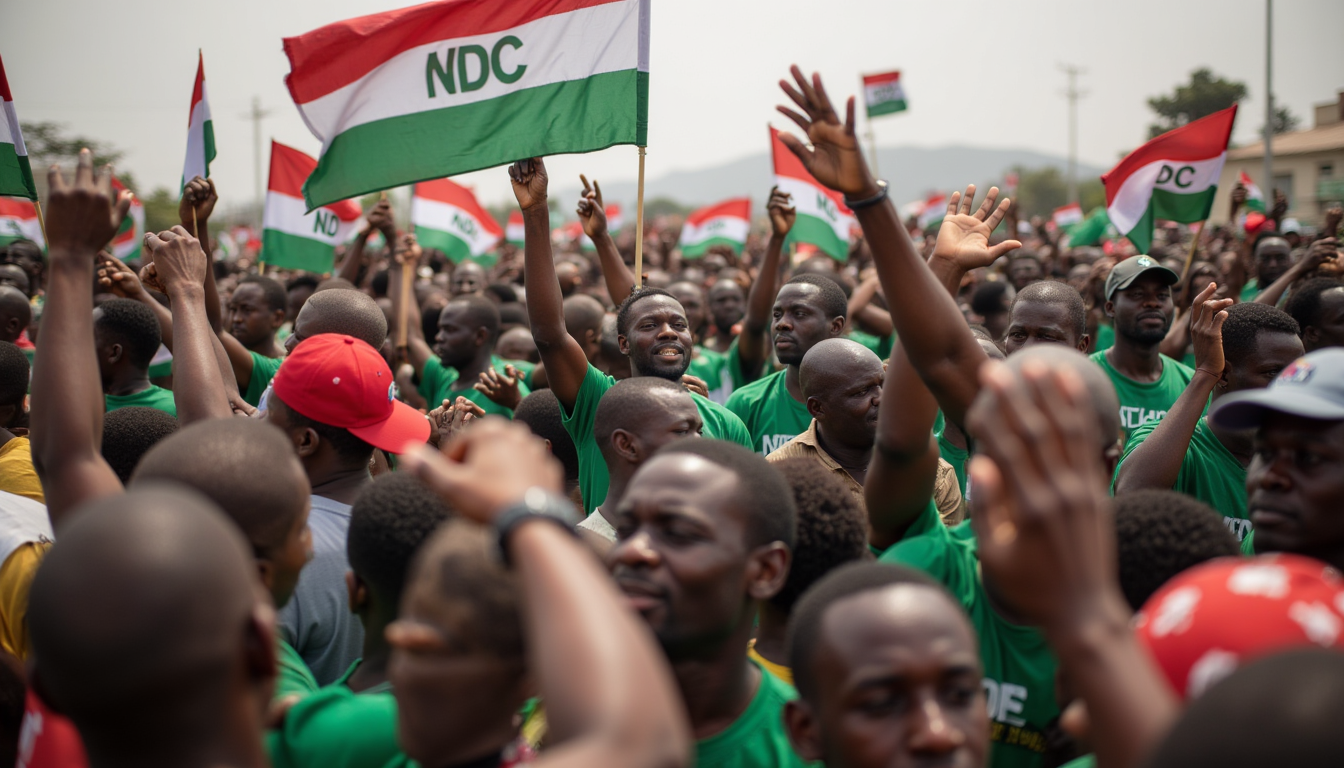

Series: The Foot Soldier Chronicles — Episode 3
The conversation about political foot soldiers Ghana continues to grow louder now that the campaign dust has settled and the appointment lists have begun to appear.
But perhaps the matter is easier to understand through a small village lesson.
Once upon a time in a town where even goats attended community meetings, a chief decided to build a new palace.
The whole village came out to help.
Some carried sand.
Others fetched water.
Several energetic young men mixed cement with the enthusiasm of people who expected to sit close to the chief once the palace was completed.
Weeks later, the palace stood proudly in the center of the town.
The opening ceremony was grand.
Drums rolled.
Speeches flowed.
Then the chief announced the palace council.
And suddenly many hardworking helpers realized something important.
Helping to build a palace does not automatically qualify you to sit inside it.
“Every palace has many builders, but very few chairs at the council table.”
The Appointment List Season for Political Foot Soldiers Ghana
Every election has two seasons.
The first season is the campaign.
The second season is the appointment list.
The first season is noisy.
The second season is delicate.
During campaigns, loyalty is the most valuable currency.
Political foot soldiers Ghana carry banners, mobilize communities, defend party positions, and sometimes argue with relatives during family gatherings.
They sacrifice time, reputation, and occasionally peace of mind.
So when victory finally arrives, expectations also arrive.
Some expect jobs.
Some expect appointments.
Some simply expect recognition.
But then the appointment lists begin to appear.
And suddenly the arithmetic of governance introduces itself.
“Campaign enthusiasm is unlimited. Government positions are not.”
The Politics of Expectation
The tension surrounding political foot soldiers Ghana is not new.
Every democratic system wrestles with the same quiet puzzle.
How do you reward loyalty without weakening competence?
Supporters argue that without grassroots dedication, political victories would remain dreams.
Leaders argue that running a state requires experience and technical expertise.
Both arguments carry weight.
That is why the appointment season often feels like a slow-moving storm.
No thunder.
But plenty of clouds.
This same national tension appears in other sectors too, where expectation and structure do not always shake hands. Read also Ghana Cocoa Industry: 9 Hard Truths Behind Africa’s Golden Bean.
The Hidden Economy of Politics
Politics operates on an unusual economy.
During campaigns, the currency is loyalty.
After victory, the currency becomes competence.
The exchange rate between the two is rarely smooth.
This is where disappointment begins to whisper in many corners.
The supporter who marched in the sun believes his effort deserves recognition.
The policymaker believes the ministry requires someone with technical experience.
And so both sides stare at each other like two passengers holding different tickets for the same seat.
“Loyalty wins the election. Competence runs the office.”
The same hard logic of structure shapes public life across Ghana. Our piece on Cocobod Forward Sales Model Explained shows how systems often determine who benefits first and who must wait patiently at the back of the queue.
The Village Wisdom
Old village proverbs rarely waste time explaining complicated realities.
They simply state the truth.
The elders say:
“The drummer may lead the celebration, but he does not automatically become the chief.”
Political foot soldiers Ghana play a crucial role in democratic life.
They energize campaigns.
They keep parties connected to communities.
They remind leaders that politics begins with people.
But leadership positions carry responsibilities that extend beyond loyalty.
Governance demands competence.
Administration demands structure.
And structure, unfortunately, has limited chairs.
Even Ghana’s electoral framework reminds us that elections and governance are not the same thing. The Electoral Commission of Ghana oversees the democratic process of voting, but what happens after victory belongs to the harder world of administration, appointments, and public responsibility.
A Reflection from the Republic
Perhaps this is what the Republic of Uncommon Sense quietly teaches after every election.
Victory belongs to many.
Responsibility belongs to a few.
The challenge for leadership is to recognize sacrifice without turning government into a family buffet.
The challenge for supporters is to understand that not every builder of the palace becomes a palace elder.
Because in politics, as in village construction, the most important lesson is simple.
Helping to build the house does not automatically assign you a bedroom.
Political foot soldiers Ghana remain one of the most visible and influential forces in the country’s democratic culture, but visibility and influence do not always translate directly into office.
If you want to see how public frustration often grows when promise meets limit, you may also read Ghana Cocoa Price Cuts Explained. Different sector, same national headache.
The Uncommon Sense Playbook

The Uncommon Sense Playbook is a calm, practical guide for thinking clearly in a world addicted to noise.
It helps readers cut through distraction, resist performative thinking, recognize false expertise, and make decisions that hold up under pressure.
Written for leaders, professionals, creatives, and independent thinkers, it values clarity over applause and substance over visibility.
This is not motivation.
It is orientation.