

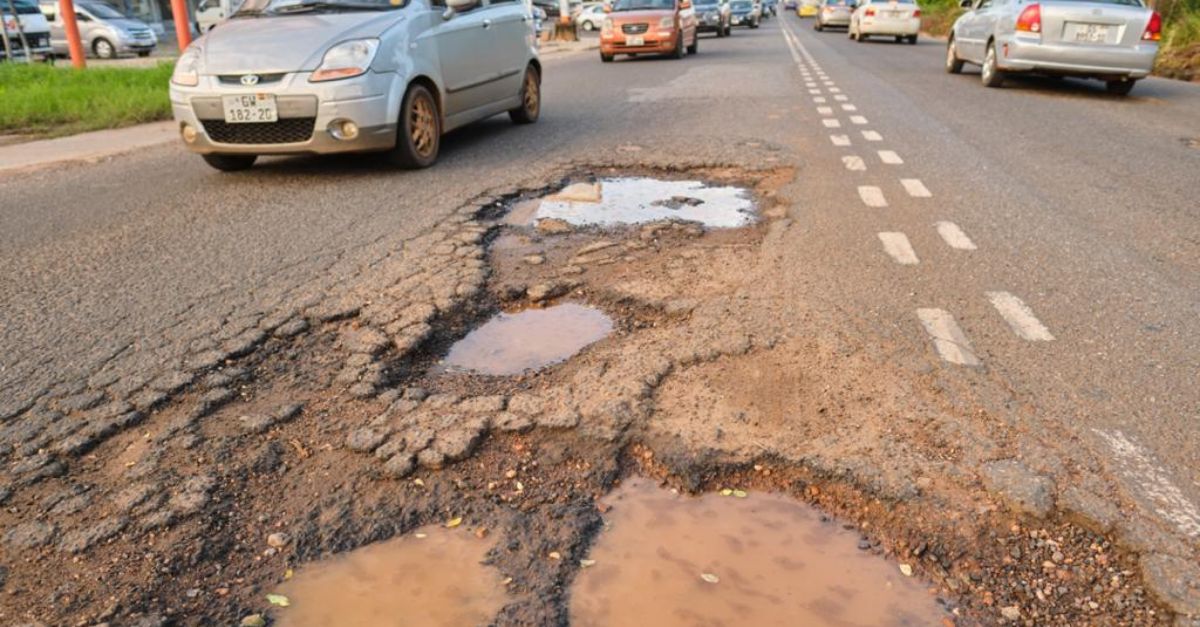

Potholes in Ghana are the real kings of our republic — they don’t wear crowns, don’t contest elections, yet they humble convoys and swallow shock absorbers whole.
Some links in this article may be affiliate links. This means the Republic of Uncommon Sense may earn a small commission at no extra cost to you if you choose to purchase through them. We only recommend products that help citizens survive daily life in the Republic — potholes included.
Here, we don’t just drive cars — we drive obstacle courses sponsored by rain, neglect, and relatives whose qualifications include knowing someone who knows someone. Every city road is a puzzle. Your shock absorbers say their morning prayers before ignition. By dusk, your mechanic hums praise songs — potholes pay his children’s school fees better than your salary pays yours. This, in essence, is daily life in the
Republic of Uncommon Sense.
There is no class divide on these roads. Ministers in air-conditioned convoys swerve like common taxi drivers. The rich swerve in SUVs designed to conquer deserts but defeated by neighbourhood craters. The poor swerve on okadas, clutching ribs, handlebars, and curses at the same time. Potholes in Ghana are truly democratic.
Election season brings hope. A government official appears in a reflective vest, TV crew in tow. He dips a finger in wet tar and smiles for the evening news:
“We are committed to quality roads.”
His driver parks safely on dry ground while the pothole enjoys its close-up. The camera cuts. The tar dries. The hole survives.
Then comes the signboard:
“THIS ROAD IS UNDER CONSTRUCTION.”
It stays there for years — a polite monument to national patience. Children learn to read by spelling the contractor’s fading promise as they hop over puddles on their way to school.
When it rains, the pothole becomes a pond. When it dries, it becomes a dust bowl. Either way, your bumper weeps. Drivers master the national dance: one wheel on the road, one wheel in the bush, horn blaring apologies to pedestrians forced into early bushwalking careers.
In Parliament, an Honourable rises solemnly.
“Mr Speaker, my people need roads.”
Everyone nods. Allowances are signed. A committee is formed — its first meeting held in a hotel nowhere near the pothole in question.
Meanwhile, the pothole expands its CV. It outlives MPs, survives reshuffles, and passes from one administration to the next like a hereditary disease. Sometimes a quick patch appears — gravel dumped by dawn, stolen by dusk. The next rain washes it away, leaving a hole deeper than our national debt and twice as stubborn.
Mechanics flourish.
“Chief, you need new shocks, new ball joints, new alignment.”
Translation: thank potholes in Ghana for sustaining the spare-parts industry.
Daily commuting over pothole-riddled roads takes a toll on both vehicle and body. Many drivers now rely on
night driving glasses,
reinforced tyres, and heavy-duty suspension parts to reduce eye strain and vehicle damage caused by potholes in Ghana.
This will not fix the road — but it may save your spine.
Citizens adapt. We invent new proverbs.
“A man who loves his car does not speed at night.”
“Better to arrive dusty than to arrive in a tow truck.”
Some drivers name the deepest potholes after politicians — immortal monuments you can’t pave over with speeches.
Yet, we endure. School buses crawl through puddles that can swallow smaller cars whole. Trotros bounce like they’re possessed by ancestral spirits. And the big man’s convoy? It crawls over the same road with armed escort — not to fight robbers, but to scare potholes into behaving. The potholes ignore the sirens.
In the Republic of Uncommon Sense, we don’t just dodge potholes — we dodge the truth that fixing them is bad business for someone somewhere. Better to patch your car than patch the road. Better to budget for allowances than bitumen.
So tomorrow, when you hit that bump and your tyre sighs, whisper thanks. You’ve just paid an indirect tax — straight into someone’s pocket, stamped by the contractor’s invisible shovel.
And when you arrive late, blame the pothole. It is the only excuse no boss can question. Even the President’s convoy slows down for it.
That, dear citizen, is real power in the Republic of Uncommon Sense.
And so, potholes in Ghana remain the only institution that never changes hands, never misses deadlines, and never answers parliamentary questions. They endure through regimes, budgets, and manifestos — silent, loyal, and fully funded by neglect. Long after press releases fade and roadmaps expire, the pothole stays put, reminding us that in this Republic, permanence belongs not to policy, but to the hole in the road.
For official context on road infrastructure, see updates on
Ghana roads.