




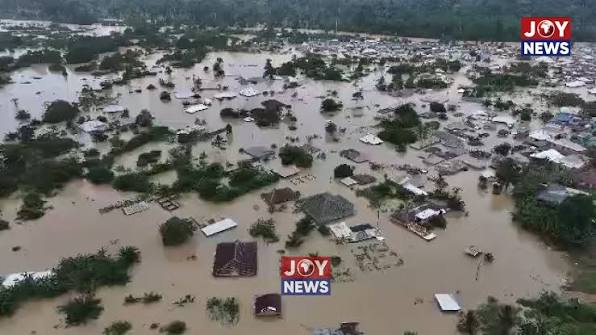
After devastating floods hit Samreboi, galamsey activities have reportedly returned. This open letter asks whether Ghana is finally ready to confront the powerful interests behind the menace.
Your Excellency, Mr. President,
In Ghana, we do not usually begin difficult conversations with the difficult part. That would be considered poor upbringing.
If a man travels from Kumasi to his hometown because his uncle has sold the family cocoa farm without consulting anybody, he does not arrive, sit down and immediately ask where the money is. No. He is first welcomed and given a seat. Water is brought. He drinks—or at least touches the glass respectfully to his lips—and only then do the greetings begin.
He asks about his uncle’s health, his wife and the children. He enquires about the farm—the same farm that, unknown to the uncle, he already knows has been sold. If there are goats wandering around the compound, their welfare may also receive brief diplomatic attention.
The uncle, in turn, asks about the journey, work, the children and everybody at home.
Everyone knows that this man did not travel all the way from Kumasi merely to conduct a census of family wellbeing, but nobody is in a hurry. Difficult matters must first be escorted into the room by good manners.
Only after the water has been served, the greetings properly exchanged and the conversation has travelled respectfully around several subjects that have absolutely nothing to do with the reason for the visit does someone clear his throat and say:
“Uncle, there is a small matter that has brought us.”
The matter, of course, is never small.
The cocoa farm is gone.
Mr. President, I was raised in that tradition, so permit me to begin properly.
I trust you are well. I trust the family is well. I trust the ministers are well, the task forces are well, the committees are meeting, and all the excavators previously seized in the fight against illegal mining are also resting peacefully wherever government property rests when nobody appears to know exactly where it is.
Now that the greetings are over, Mr. President, there is a small matter that has brought us.
The country is being destroyed.
And in Samreboi, the evidence is becoming increasingly difficult to explain away.
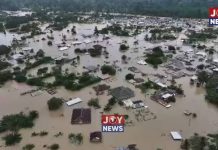
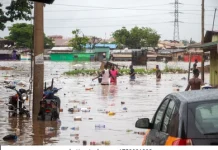
A devastating flood comes. The Tano and Samre rivers overflow their banks. Homes are affected, families suffer and lives are disrupted. The community begins counting its losses while officials arrive, cameras roll, interviews are granted and concern is expressed in the appropriate official vocabulary.
Then, while the mud is still drying, the excavators return.
The illegal miners are back.
One must admire our national commitment to consistency.
In some countries, a disaster is treated as a warning. In Ghana, it sometimes appears to be regarded as an intermission. The rivers flood, meetings are held, officials visit and assurances are given. Then the cameras leave, the speeches end, the excavators start their engines, and life returns to abnormal.
Mr. President, I have tried to imagine the conversation between the people of Samreboi and the two rivers that overflowed their banks—the Tano and the Samre.
Perhaps the rivers would ask:
“Did you not understand what just happened?”
And perhaps we would reply:
“We understood perfectly. But the gold is still there.”
There are moments when a country behaves like the proverbial child who touches a hot coal, screams, receives treatment for the burn and, immediately after the bandage is applied, asks where the coal has gone.
The problem is that repeated behaviour cannot forever be explained away as foolishness. When the danger is known, the consequences have been witnessed, the warnings have been given and the destructive activity continues, the matter becomes a question of enforcement, deterrence and, ultimately, political will.
The next flood will not read the communiqué from the last one. The rivers will not be impressed by the number of officials who visited, and water, as we have discovered repeatedly, has very little respect for political protocol.
Many years ago, when some of us were children, water occupied a different place in our lives. It was not something one purchased in sachets, tested in laboratories before drinking or approached with suspicion.
Water simply existed.
It flowed through streams and rivers whose names were known to every child. Women fetched it in aluminium pans balanced upon their heads. Children played in it, fishermen depended upon it and farmers prayed for it.
No one asked whether the river was safe. The river had already answered that question simply by being a river.
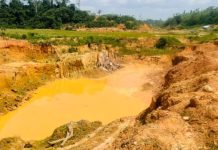
Today, a Ghanaian child may look at some of our rivers and reasonably ask whether Milo has entered the water business. The water is brown, the banks are wounded and the forests are retreating, while somewhere nearby an excavator works diligently to ensure that the damage becomes increasingly difficult to reverse.
For generations, our rivers performed their duties with admirable discipline. They attended no political rallies, belonged to no party, sought no appointments, requested no protocol allocations and demanded no V8 vehicles.
They simply flowed.
Today, many can no longer perform even that modest national service without negotiating their way around excavators.
The difficulty, Mr. President, is that rivers cannot issue press statements. Forests cannot demonstrate, and the land cannot organise a press conference.
If the Tano River could hire a public relations consultant, perhaps by now it would have issued a strongly worded statement, called an emergency press conference and urged all stakeholders to treat the matter with the urgency it deserves.
Unfortunately, nature has no communications director.
Citizens must therefore speak on its behalf.
And at this point, we must speak plainly.
The reported return of illegal mining activity to the Samreboi area so soon after the devastating flooding is an indictment of the system responsible for protecting that environment.
If a disaster of such magnitude cannot interrupt illegal mining for long, then what exactly will stop it? If destroyed homes, displaced families and rivers bursting their banks cannot make us reconsider what is happening around Samreboi, what greater warning are we waiting for?
Perhaps we are waiting for the Tano River itself to arrest an excavator.
At this stage, one cannot completely rule out the possibility, because increasingly it appears that everybody knows where the machines are except the people with the legal authority to stop them.
Mr. President, the nation has heard enough announcements about the fight against illegal mining to fill a respectable government archive. We have had task forces, special operations, committees, investigations, promises and declarations. Excavators have been seized, and some have subsequently developed the mysterious Ghanaian ability to disappear after seizure.
We have launched operations with names powerful enough to frighten an enemy army. If galamsey could be defeated by vocabulary, Ghana would have the cleanest rivers in the world.
Unfortunately, rivers are not cleaned by speeches, excavators are not stopped by press conferences, and criminal networks are not dismantled by expressions of concern.
The machines continue to work.
And now, close to the banks of the Tano River, they are reportedly back.
The Real Galamsey Network Is Not in the Mud
This is why we must stop pretending that galamsey is simply a story about poor young men standing in muddy pits. The young man holding a shovel does not have the influence to transport an excavator across districts without attracting attention. The labourer standing waist-deep in contaminated water does not issue permits, arrange protection or make telephone calls that cause enforcement officers to suddenly remember an urgent meeting elsewhere.
An excavator cannot hide behind a tree. It cannot travel in somebody’s pocket or mine quietly under a bed. Heavy machinery moves on roads, consumes fuel, requires operators and produces gold that enters a commercial chain.
Somebody owns the machine. Somebody finances the operation. Somebody buys the gold. And somewhere along that chain, there may be somebody powerful enough to make the right telephone call at the right time.
That is where the real fight must go.
The fight against galamsey cannot continue to begin and end with the poorest person standing in the mud while those who finance, facilitate and profit from the destruction remain in air-conditioned offices discussing environmental sustainability.
That arrangement is too convenient.
And this, Your Excellency, is where leadership becomes difficult.
It is easy to confront political opponents. Politics has prepared everybody for that examination. The more difficult test is confronting one’s own people: the party financier, the influential businessman, the local power broker, the official whose telephone call makes a task force suddenly lose its GPS signal, and the person whose name everybody whispers but nobody writes in the arrest report.
Galamsey has survived successive governments not because Ghana lacks laws. We have enough laws to start a wholesale business. What we have repeatedly lacked is the courage and consistency to apply them to people with important telephone numbers.
Our problem is certainly not ignorance.
If villagers know where illegal mining is taking place, journalists know and drone cameras can find the sites, it would be extraordinary if the entire national security architecture alone were suffering from poor network coverage.
We know the rivers are being destroyed. We know the machinery involved is not invisible. We know that allegations of political protection have followed the galamsey story across administrations, and we know the consequences.
The question is no longer whether Ghana understands galamsey.
The question is whether those entrusted with power are prepared to offend powerful people in order to stop it.
Mr. President, rivers do not recognise political parties. Mercury does not distinguish between NDC and NPP. Contaminated water does not ask who voted for whom, and a flood does not pause at the doorstep to inspect a party card.
When a river dies, everybody downstream becomes an opposition party.
That is why Samreboi must not become another story that trends for forty-eight hours and disappears when the next political argument arrives. The people have suffered, the rivers have warned us, and yet the machines have returned.
There is a Ghanaian saying that when a frog comes out of the water to tell you that the crocodile is sick, you do not argue with the frog.
In Samreboi, the rivers themselves have come out of their banks. They have entered homes, disrupted lives and delivered their warning without metaphor.
And somehow, our national response appears to be:
“Thank you for the information. Mining will resume shortly.”
That cannot continue to be our answer.
There is a story from village life that comes to mind.
A farmer notices that goats have entered his farm and are eating his crops. He raises the alarm, and soon people gather to discuss the seriousness of the situation. A committee is formed to investigate how the goats entered. Another group is asked to assess the damage, while a spokesman assures the farmer that the matter is receiving urgent attention.
Meanwhile, the goats continue eating.
Eventually, the farmer stops listening to the speeches and asks the only question that matters:
“Who is removing the goats?”
That is where many Ghanaians now find themselves on galamsey.
We have heard the concern, the commitments and the promises. We have watched the launches and seen the uniforms, convoys and press briefings.
But the goats are still in the farm.
And some of them, we increasingly suspect, may belong to important people.
Mr. President, Samreboi should now become a test case, not another case study.
The country deserves to know who is behind the resumed operations. The financing networks should be exposed, the ownership of the machinery established and those providing protection identified. Enforcement officers must be protected from interference, and offenders must face the law regardless of party affiliation, financial influence or proximity to political power.
This is not a call for dramatic arrests designed for television cameras. We have watched enough operations begin with sirens and end in silence.
What the public needs is visible accountability.
Tell us who owns the machines, who financed the operations and who bought the gold. Tell us whether anybody interfered with enforcement, and tell us what happened when the cases reached court.
Accountability cannot remain confidential while environmental destruction is public.
Most importantly, the fight must move from the muddy pit to the air-conditioned offices where the real decisions are made. The poor man in the pit may be the visible hand of galamsey, but he is not the entire body.
Follow the money, the machinery, the gold and the protection. Somewhere along that journey, follow the telephone calls too.
History has placed you in a unique position, Mr. President.
Few leaders are given the opportunity to confront a national menace whose consequences will outlive their term of office. Roads will be renamed, buildings will be repainted, political slogans will expire and manifestos will gather dust.
But a poisoned river may remain poisoned long after everyone who attended the commissioning ceremonies of our time has left public office.
Years from now, Ghanaians may forget who insulted whom at a press conference, which party communicator won Tuesday evening’s television argument, and even some of the ministers whose convoys currently make the rest of us park by the roadside.
But they will remember whether Samreboi was treated as a warning or merely as another disaster scene visited by officials, photographed by cameras and forgotten once the mud had dried.
They will remember whether, after everything that happened, the excavators were finally stopped.
Perhaps one day, a child will stand beside the Tano River and ask:
“Did they know what was happening?”
The truthful answer will be yes.
The more dangerous question will be:
“If they knew, why did they allow it to continue?”
Mr. President, this is no longer the time for another expression of concern. Ghana has expressed enough concern to fill the Tano River, if only concern were water.
What we need now are consequences.
The decisions taken today could leave a legacy far greater than roads, buildings and monuments. You could become the President who stood between a nation and environmental ruin and decided that the political cost of saving Ghana was preferable to the historical shame of watching it being destroyed.
But history will judge action, not intention.
Rivers cannot vote. Forests cannot campaign. The land cannot donate to political parties or send representatives to Parliament.
And the Tano River, despite its recent dramatic press conference in Samreboi, still does not have a seat at the Cabinet table.
Its future, and the future of the communities that depend upon it, rests in the hands of those entrusted with power.
Mr. President, the excavators are back.
The country is watching.
And this time, speeches will not be enough.
Respectfully,
Jimmy Aglah
Citizen