

There is something wonderfully Ghanaian about our war against galamsey. The Ghana galamsey fight has become a familiar national ritual.
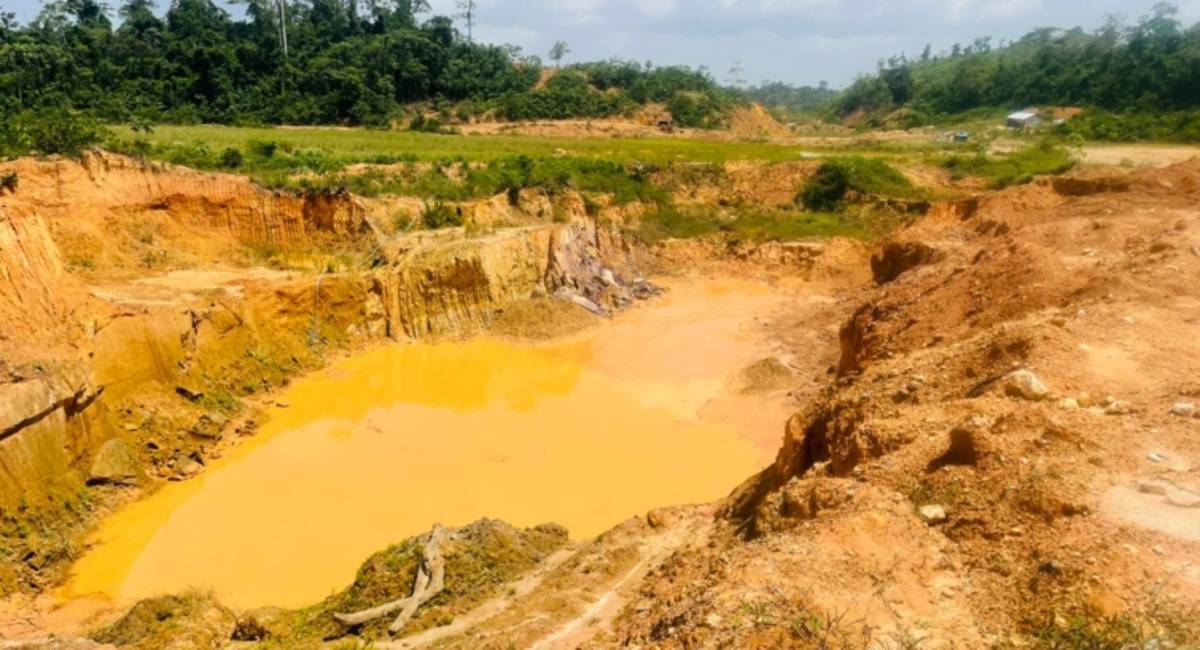
Every new government arrives at the battlefield carrying a bigger trumpet than the government it replaced. The speeches become fiercer, the committees acquire longer names, task forces emerge with impressive acronyms, and excavators suddenly develop the nervous disposition of goats approaching Christmas. Then, after all the ceremonies, we walk quietly to the river to inspect the results and discover that it is still brown. One government leaves office and another arrives with fresh slogans and renewed determination, but when we return to the river, the water is still brown. At this rate, the River Pra may soon have to apply officially to the Lands Commission to have the word “river” removed from its name.
Nobody can fairly accuse the previous NPP government of doing absolutely nothing about the Ghana galamsey fight. In its early days, President Akufo-Addo approached the menace with the confidence of a headmaster who had finally discovered who was stealing the school plantain. Small-scale mining was temporarily banned, Operation Vanguard arrived, soldiers and police officers entered mining communities, changfang machines were destroyed and excavators seized. Then came that famous declaration about putting the presidency on the line, and some of us shouted, “Ei!” because in Ghana, whenever a politician puts something “on the line,” the wise citizen must first ask who exactly is holding the other end.
With time, however, the great offensive began losing its boots. Excavators developed an extraordinary ability to disappear, political accusations multiplied, party people were accused of involvement, and Aisha Huang entered our national vocabulary so thoroughly that she almost became a chapter in the social studies syllabus. Meanwhile, rivers continued changing colour and forests continued losing their dignity. Eventually, the great galamsey war began to resemble one of those old Kumasi–Accra buses which leaves Kejetia roaring like an aeroplane, only to break down around Konongo while passengers sit under a mango tree and the driver disappears into town looking for a mechanic.
By the end of the NPP administration, nobody needed sophisticated scientific instruments to know that the fight had gone badly; you only needed eyes. Then came the NDC, and ah, these people knew the disease! From opposition, they diagnosed Ghana’s galamsey problem with the precision of Korle Bu specialists. They told us the government lacked political will, condemned the poisoning of our rivers and destruction of our forests, denounced the political protection allegedly enjoyed by illegal miners, and appeared to know where the disease was hiding, what medicine was required and why the doctors then in charge were incompetent.
Ghanaians listened and eventually voted, and the specialists have now entered the theatre. More than a year later, some of us are sitting anxiously outside asking the nurse, “Madam, how is the patient?” only to receive an answer that sometimes sounds suspiciously like, “We have inaugurated another task force.”
To be fair, the current government has not been sitting under a mango tree. NAIMOS has conducted operations, excavators have been seized, thousands of changfang machines have reportedly been destroyed, suspects have been arrested, and the controversial L.I. 2462, which permitted mining in forest reserves under specified circumstances, has been revoked. These are significant interventions and should be acknowledged, but government faces one particularly stubborn opposition spokesman who cannot be persuaded by statistics: the river.
Ghana Galamsey Fight: The Rivers Are the Scoreboard
The Pra does not attend ministerial briefings, the Ankobra has no Facebook account on which government communicators can explain that progress is being made, and the Birim cannot be invited onto morning television to appreciate government’s efforts. A river understands only one political language, and that language is clean water.
That is where the disappointment begins, because when you spend years in opposition telling citizens that the government lacks the political courage to defeat galamsey, you cannot arrive in office and expect applause simply because you are fighting the same monster with a different acronym. We did not change governments so that the colour of the task-force uniform could change while the colour of the river remained the same.
There lies one of the enduring wonders of Ghanaian democracy. Opposition parties possess enormous quantities of political courage; indeed, if political courage could be exported, Ghana might no longer need cocoa. Unfortunately, shortly after inauguration, the deposits mysteriously begin to run out.
The politician who could identify illegal miners from fifty kilometres away while sitting in opposition suddenly develops cataracts in government, the activist who demanded soldiers yesterday discovers human rights today, and the communicator who once presented every muddy river as evidence of governmental wickedness now arrives on television carrying charts to explain that turbidity has fallen from one frightening number to another slightly less frightening number. At which point the thirsty citizen is entitled to ask, “My brother, can I drink the statistics?”
This is precisely why the Ghana galamsey fight must not be reduced to another NPP-versus-NDC football match. The NPP’s failure does not excuse the NDC; if anything, it raises the standard by which the NDC must be judged. You saw the house burning, stood outside shouting that the occupants were incompetent, explained where the fire started, identified the people carrying petrol and assured the neighbourhood that you possessed a superior fire service. We handed you the keys, and if, more than a year later, we are still gathered outside discussing flames, there comes a point when you cannot continue pointing at the former tenant. At some stage, the fire becomes yours.
The deeper tragedy of the Ghana galamsey fight is that successive governments have tried to confront an economic and political monster without sufficiently confronting the political and financial interests that feed it. Destroy ten thousand changfang machines today and another ten thousand can arrive tomorrow if the financiers remain untouched. Arrest the young man standing waist-deep in muddy water and another desperate young man will replace him if the person financing the operation remains comfortably seated in an air-conditioned office. That is not uprooting the tree; it is merely plucking leaves while leaving the roots comfortably underground.
Our elders understood something about this long before environmental consultants arrived with PowerPoint presentations: if you spend every evening killing mosquitoes but refuse to drain the stagnant water behind your house, you should budget generously for mosquito coils. The real test of the Ghana galamsey fight, therefore, is not merely how many machines are burnt or how many barefoot miners are arrested, but whether the powerful financiers, concession holders, politically connected operators and officials who enable illegal mining are pursued with the same enthusiasm.
That is why I expected much more from this government, not because the previous government succeeded, but precisely because it failed. The NPP entered the Ghana galamsey fight promising a war and eventually lost credibility in prosecuting it; the NDC then spent years explaining why that war had failed and promising something better. It now has both the opportunity and responsibility to prove that it understood its own diagnosis.
Fortunately, this examination requires no invigilator because the examination paper lies across Ghana for everybody to see. It is written in the Pra, the Birim and the Ankobra, across wounded forests and devastated cocoa farms, and in communities wondering what their children will drink if today’s gold becomes tomorrow’s poison. We have already seen how easily the Republic can drift towards [bottled-water governance] when public systems fail; we should not allow galamsey to turn that satire into our national water policy. There will be no marking scheme from NPP headquarters or NDC headquarters because the rivers will mark the examination themselves.
Ultimately, the Ghana galamsey fight will not be judged by the number of operations launched, machines destroyed or speeches delivered, but by whether our poisoned rivers become rivers again.
When those rivers begin looking like rivers again, government may bring the microphones, statistics and PowerPoint presentations and invite us to applaud. Until then, some of us reserve the democratic right to remain thoroughly disappointed, because after all the governments, task forces, military operations, committees, arrests, seizures, speeches, promises and presidential assurances, the ordinary Ghanaian is entitled to ask one embarrassingly simple question: When exactly will the water become water again?