





In the Republic of Uncommon Sense, peace arrives with a press conference.
Sign Here for Peace, Fight Later
Ghana political satire: Once upon a time in the Republic of Uncommon Sense, peace did not arrive quietly.
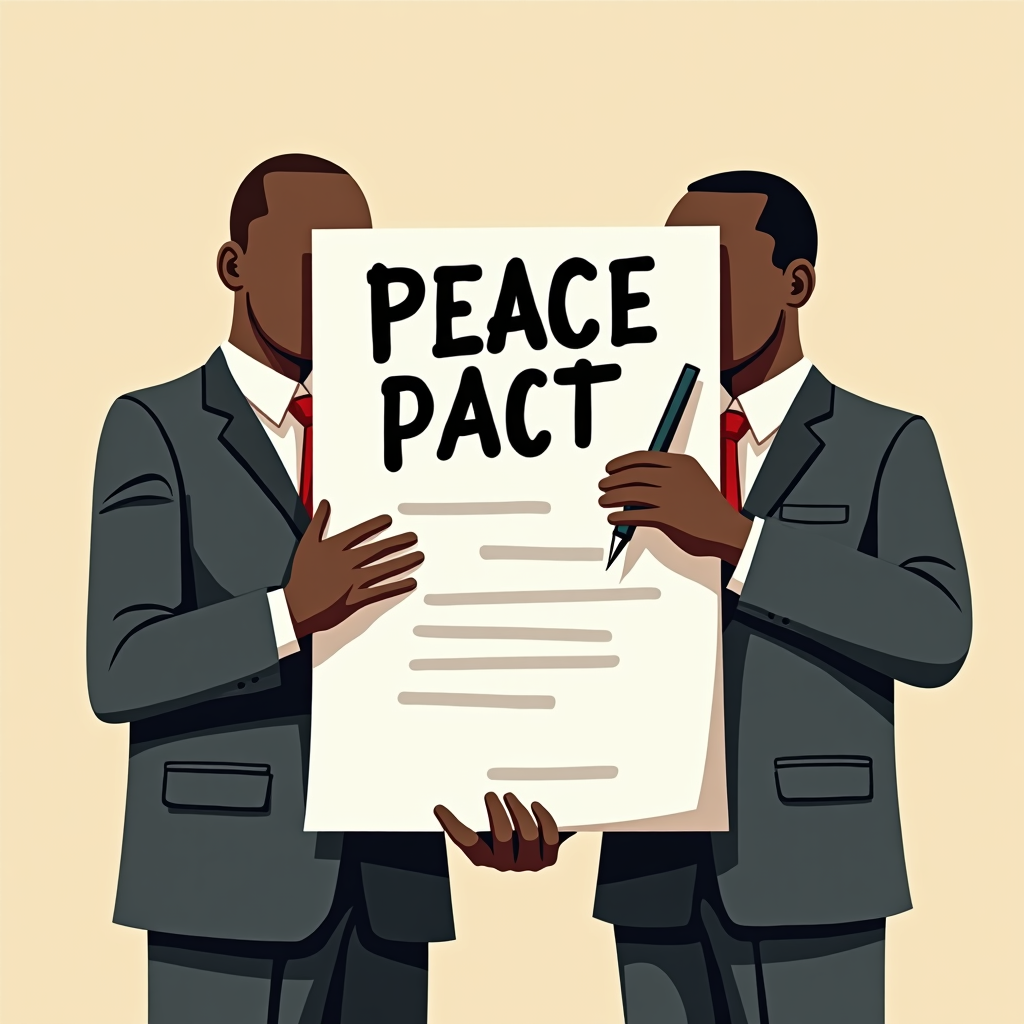
It arrived with a banner, a backdrop, bottled water, and a press release written in bold font. This week, peace was summoned again—this time by the good men and women of the New Patriotic Party, who gathered solemnly to sign a peace pact ahead of their primaries.
Pens were held like sacred relics. Hands were shaken with the enthusiasm of people greeting a future enemy. Cameras clicked. Smiles were deployed. Peace was declared.
In Ghana, a peace pact is not a promise; it is a pre-emptive apology. It is the political version of saying “no hard feelings” before borrowing your neighbour’s cutlass and returning it bent. Everyone signs knowing very well that someone will lose, and that losing in Ghanaian politics is not a result—it is an allegation.
The pact is therefore not about peace; it is about paperwork. When trouble eventually comes, everyone can point to the document and say, “But we signed ooo.”
Ghana political satire and the peace pact performance
The atmosphere at such events is always impressive. You will see men who have not spoken to each other since 2008 laughing like old schoolmates. You will see hugs so tight they could be mistaken for wrestling holds. You will hear words like “unity,” “party first,” and “together we win,” even though everyone present knows the real slogan is “together we win, separately we complain.”
It is like a wedding where the couple is already fighting over land documents, but the MC insists on “put your hands together for love.”
And the people of the Republic nod approvingly, because we have seen this film before. We know the script. Today: peace pact. Tomorrow: “irregularities.” Next week: “my supporters acted on their own.” By the end of the month, someone’s auntie will be on radio explaining how her nephew was robbed by destiny, technology, or an invisible hand wearing the wrong party T-shirt.
While peace was being signed on one side of town, strategy was being ironed quietly on the other. Over at the National Democratic Congress corner of the Republic, attention had shifted to a by-election brewing in Ayawaso East. A vacant seat. A grieving moment. And, inevitably, political calculators already doing mental arithmetic faster than a trotro mate calculating your change.
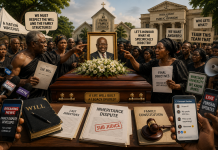
Some voices, wrapped gently in sympathy, suggested that the late MP’s widow should step forward. In Ghana, this suggestion always arrives wearing funeral cloth on the outside and campaign boots underneath. It sounds noble. It feels compassionate. It tests poorly if you ask uncomfortable questions. But nobody asks those at funerals. You just nod, wipe your eyes, and quietly ask where the nomination forms are.
This is not new to the Republic. We have long mastered the art of mixing emotion with mobilisation. We can mourn in the morning and strategise by afternoon. We can cry genuinely and still remember voter turnout figures. In Ghanaian politics, grief is respected—but votes are respected more. Condolence books eventually close; ballot boxes must open.
So you will hear people saying, “It is to honour his legacy.” And others saying, “It is what the people want.” Meanwhile, party executives are saying nothing at all, because silence is sometimes the loudest form of agreement. Democracy, in this moment, removes its sandals, sits quietly by the widow, and checks its watch.
Put the two scenes together and you see the full beauty of the Republic of Uncommon Sense. One party signs peace before fighting. Another weighs sympathy before campaigning. Both are acting within the rules. Both are performing for the gallery. And the voter, experienced and slightly amused, watches with the calm of someone who has survived load shedding, fuel hikes, and WhatsApp family groups.
In this Republic, politics is not wicked—it is theatrical. It understands timing. It knows when to clap, when to cry, and when to deny responsibility. Peace pacts are signed not because everyone will be peaceful, but because everyone wants to be seen as peaceful.
Widows are proposed not because politics is heartless, but because politics has learned that the heart, like the ballot, can be persuasive. This Ghana political satire captures how elections, grief and unity are often staged as performance in public life.
And so the Republic moves on. Peace is promised. Sympathy is expressed. Ambition remains undefeated. Somewhere, a citizen shakes his head and says, “Ei, Ghana.” Somewhere else, another replies, “Charley, this thing be politics.” And in the background, democracy clears its throat, adjusts its cloth, and prepares for the next performance—because in the Republic of Uncommon Sense, the show must always go on.
More dispatches you’ll enjoy:
-
Ghana traffic satire: when the road becomes a life sentence
-
Potholes in Ghana: the national sport we didn’t register for
For straight-faced context behind the jokes, follow Ghana politics coverage on
MyJoyOnline
and
Citi Newsroom.
Read before commenting. Then comment anyway. 😄
Where does peace end and performance begin?
Further reading: If this Republic feels familiar, you’ll enjoy my eco-critical political thriller on power, greed, and the fight for land and dignity.